
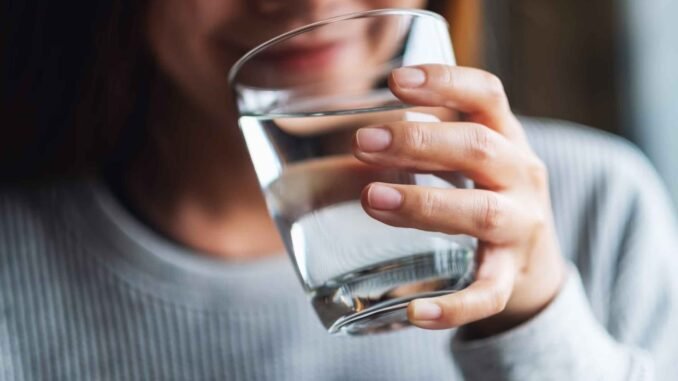
“Drink 8 glasses a day!” You’ve heard it forever. But where did that number come from? (Spoiler: no one really knows — it’s not based on solid science.) Meanwhile, fitness influencers chug gallons, your coworker carries a half-gallon jug, and you’re wondering if your 3 coffees and a LaCroix count. If you’re asking how much water should I drink every day for good health, here’s the evidence-based answer: it depends on you — your size, diet, activity, and climate — but there are simple rules that work better than any magic number.
Let’s clear up the biggest myth first: there’s no single correct number for everyone. The “8×8 rule” (eight 8-ounce glasses) has no strong scientific origin — it likely came from a 1945 Food and Nutrition Board recommendation whose crucial second half everyone forgot: “most of this quantity is contained in prepared foods.” Yes — the original guidance acknowledged food water all along. So let’s build your actual answer from what science says.
How Much Water Should I Drink Every Day For Good Health? The Real Guidelines
The National Academies of Sciences set adequate intake levels based on research:
- Women: ~11.5 cups (2.7 liters) total water daily from all sources
- Men: ~15.5 cups (3.7 liters) total water daily from all sources
Critical nuance: that’s total water — including food. Fruits, vegetables, soups, yogurt, even cooked grains contribute significantly. Most people get 20–30% of their water from food. So the fluids target is roughly 8–12 cups daily for most adults — which, amusingly, lands near the old 8-glasses advice, just for different reasons.
The National Academies report is the authoritative source; the CDC’s water facts page offers practical consumer guidance.
Adjusting for Your Life
The baseline shifts with:
- Activity: Exercise adds 1.5–2.5 cups per hour of sweating. Endurance athletes in heat may need much more — with electrolytes, not just water (overhydration without electrolytes causes hyponatremia, which is genuinely dangerous).
- Climate: Hot, humid, or high-altitude environments increase needs significantly. Air conditioning and heated indoor air are mildly dehydrating too.
- Diet: High-protein or high-fiber diets need more water. Salty meals too. Conversely, a diet rich in fruits, vegetables, and soups covers more of your needs through food.
- Caffeine: Coffee and tea DO count toward hydration — the mild diuretic effect doesn’t cancel out the water content. This myth needs to die: your morning coffee hydrates you.
- Alcohol: Doesn’t count — it’s net dehydrating. Match each drink with a glass of water.
- Illness: Fever, vomiting, diarrhea dramatically increase needs. Oral rehydration (water + electrolytes) matters more than volume alone.
- Pregnancy/breastfeeding: Needs increase (~10 cups and ~13 cups respectively). Follow your provider’s guidance.
- Age: Older adults have blunted thirst signals — schedule drinking rather than relying on thirst. (Relevant for our seniors’ guide readers.)
Better Than Counting: The Body’s Signals
Honestly, the best hydration gauge is already built in:
- Urine color: Pale straw = well hydrated. Dark yellow = drink more. Completely clear = you may be overdoing it. Check once or twice daily — that’s sufficient.
- Thirst: For most healthy adults in normal conditions, drinking to thirst works fine. The “by the time you’re thirsty you’re already dehydrated” claim is overstated for everyday life (it matters more for endurance athletes).
- Other signals: Headaches, fatigue, dizziness, and constipation can all signal under-hydration — though they have many causes. If increasing water fixes them, you found your answer.
Practical Hydration Habits That Actually Work
- Front-load your day. A large glass first thing in the morning (you wake mildly dehydrated) sets the tone. Keep water by your bed.
- Anchor to existing habits. Glass with each meal + one mid-morning + one mid-afternoon = ~5–6 cups without thinking about it.
- Keep it visible and convenient. A water bottle on your desk outperforms any reminder app. The best hydration system is the one requiring zero decisions.
- Eat your water. Cucumbers, watermelon, oranges, lettuce, soups — high-water foods count. A produce-rich diet (see our energy foods guide) hydrates while nourishing.
- Flavor without sugar. If plain water bores you: lemon, cucumber, mint, or sparkling water. What matters is drinking it, not purity aesthetics.
- Electrolytes when sweating heavily. For intense exercise over an hour or serious heat: sports drinks, electrolyte packets, or even salty snacks + water. Plain water alone during heavy prolonged sweating can dilute blood sodium.
Can You Drink Too Much?
Yes — water intoxication (hyponatremia) is real, though rare outside endurance sports and certain medical conditions. Symptoms: nausea, headache, confusion after excessive water intake. The rule: don’t force fluids beyond comfort, don’t chug gallons rapidly, and include electrolytes during prolonged heavy sweating. If you have kidney, heart, or liver conditions, follow your doctor’s fluid guidance — general advice doesn’t override medical direction.
Special Situations
- Weight loss: Drinking water before meals modestly reduces calorie intake in some studies. It’s a helper, not a strategy — see our nutrition guides for the real levers.
- Kidney stones: Higher fluid intake (enough for 2+ liters of urine daily) is one of the best preventions — ask your doctor for your target.
- Migraines: Dehydration is a common trigger; consistent hydration helps some sufferers (track it alongside other triggers).
- Skin: Hydration helps, but the “8 glasses for glowing skin” claim is oversold — topical care and diet matter more.
Quick Answers: Daily Hydration
Does coffee count toward my water intake?
Yes — the “coffee dehydrates you” myth is false. Coffee’s mild diuretic effect doesn’t cancel out its water content; your morning cup hydrates you. Count coffee and tea toward daily fluids (just watch total caffeine).
How do I know if I’m drinking enough?
Check your urine color once or twice daily: pale straw means well hydrated, dark yellow means drink more, completely clear means you may be overdoing it. For most healthy adults, thirst plus this simple check beats any rigid ounce target.
The bottom line: aim for roughly 8–12 cups of fluids daily (more if active, hot, or eating a dry diet), count coffee and food water, use pale-yellow urine as your gauge, front-load mornings, keep water visible, add electrolytes for heavy sweating, and don’t overthink it. The 8-glasses rule was accidentally close to right — but now you know the actual reasoning, which means you can adjust intelligently instead of following a myth.
Leave a Reply