
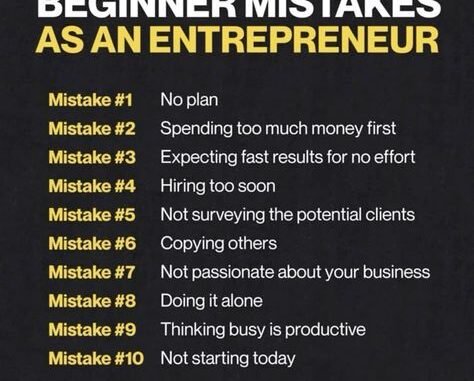
About 20% of small businesses fail in their first year, and roughly half don’t make it to year five. Those aren’t just statistics — they’re real people who poured savings, nights, and weekends into something that didn’t work. The painful part? Most of them didn’t fail because of bad luck or a terrible idea. They failed because of avoidable mistakes — the same ones, over and over. If you’re asking what are the biggest mistakes new business owners make, learning them now is the cheapest education you’ll ever get. Every mistake below has cost someone real money. Let them cost you nothing.
I’ve compiled this list from watching new businesses up close — the patterns are remarkably consistent. Nobody makes all of these mistakes, but almost every struggling new owner is making at least three of them right now without realizing it.
What Are the Biggest Mistakes New Business Owners Make? The Money Mistakes
1. Not separating personal and business finances
The #1 operational mistake, and it causes cascading damage: messy taxes, missed deductions, inability to see if the business is actually profitable, and — for LLC owners — potential loss of liability protection. Open a separate business bank account on day one. It takes an hour and prevents a year of pain. Our guide on tracking business expenses without an accountant shows you the simple system to maintain it.
2. Underpricing out of fear
New owners chronically underprice — afraid to charge “too much,” desperate for early customers, unsure of their worth. The result: you work twice as hard for half the money, attract price-sensitive customers who’ll leave for $1 less, and train the market to devalue what you do. Price based on value and costs, not fear. You can always offer an introductory discount; raising prices later is ten times harder than starting fair.
3. No cash flow management
Profitable businesses die from cash flow problems every day — money earned but not yet received, while bills demand payment now. New owners watch revenue and ignore cash timing until payroll bounces. Build a simple cash forecast from month one. Our deep dive on managing cash flow month to month walks through exactly how.
4. Spending on the wrong things early
The classic: $5,000 on a logo, premium office space, fancy equipment — before a single customer has paid. Early money should go toward things that generate revenue or validate demand: product, marketing tests, inventory. Everything else waits. Ask of every purchase: “Does this help me get or serve customers?” If not, it’s a no for now.
5. Ignoring taxes until April
Nothing ruins a promising first year like a surprise $18,000 tax bill. Set aside 25–30% of profit for taxes from day one, in a separate account, and make quarterly estimated payments. The IRS estimated tax guide has the deadlines. This isn’t optional financial advice — it’s survival.
The Strategy Mistakes
6. Building something nobody asked for
The most expensive mistake of all: spending months building a product without talking to potential customers. Founders fall in love with their solution and skip validation. Before you build, have 20+ conversations with target customers. Ask about their problems, not your idea. If they won’t pay for a solution — or won’t even take a free pilot — you don’t have a business yet, you have a hobby.
7. Trying to serve everyone
“Our target market is everyone” means your marketing speaks to no one. The riches are in the niches — especially at the start. A bakery for everyone competes with every bakery; a bakery specializing in allergen-free celebration cakes owns a category. You can expand later. Start narrow, dominate, then grow.
8. No real business plan (or a fantasy one)
You don’t need a 40-page document, but you need answers: Who’s the customer? What’s the offer? How do you reach them? What does it cost to serve them? What’s the path to profit? A one-page plan you actually use beats a binder you never open. Our guide on using AI to help write a business plan can get you a solid draft fast.
9. Copying competitors instead of differentiating
“There’s a successful coffee shop across town, so I’ll open one too” — without asking what’s underserved. Me-too businesses compete solely on price and location, the two hardest advantages to sustain. Find the gap: the customer segment nobody serves well, the experience nobody offers, the product twist nobody tried.
The People and Execution Mistakes
10. Hiring too fast (or never delegating)
Both extremes kill. Hiring employees before revenue supports them burns cash; refusing to delegate anything caps your growth at your personal capacity and burns you out. The rule: hire when the work is consistently stealing time from revenue-generating activities you do best, and start with contractors before committing to employees. When you do hire, our guide on writing job postings that attract good candidates helps you get it right.
11. Doing everything alone
Related but distinct: the lone-wolf founder who won’t get a mentor, join a peer group, or ask for help. You don’t know what you don’t know, and the mistakes you can’t see are the expensive ones. Free mentorship exists — our guide on finding a free business mentor shows you where. Pride is not a business strategy.
12. Neglecting marketing until it’s an emergency
“Build it and they will come” is not a marketing plan. New owners focus entirely on the product, then panic when launch day brings crickets. Marketing should start before launch — building an audience, testing messages, generating waitlists. Even a modest consistent effort beats a desperate last-minute splurge. See how much startups should spend on marketing for budgeting guidance.
13. Ignoring legal basics
Operating without the right business structure, skipping contracts with partners (“we’re friends, we don’t need paperwork” — famous last words), ignoring licenses and permits, not protecting your brand name. Legal problems are cheap to prevent and ruinous to fix. At minimum: proper entity formation, written agreements for anything involving money, and the licenses your industry requires. The SBA’s launch guide covers the checklist.
14. Giving up too early — or too late
Both are mistakes. Quitting at the first hard month means never discovering whether the business could work; grinding for three years on something the market rejected in month two is sunk-cost fallacy. The healthy approach: set clear milestones with deadlines (“if we don’t hit X revenue by month 9, we pivot or close”), review honestly, and decide based on data — not emotion, and not pride. And if it is time, our guide on shutting down a business properly shows how to exit cleanly.
The Mindset Shift
Here’s what separates owners who make these mistakes once from those who repeat them: the first group treats every mistake as tuition and builds systems so it can’t happen again. Missed tax quarterlies? Set up automatic transfers. Underpriced? Annual pricing review on the calendar. The mistake isn’t the failure — failing to systematize the lesson is.
The bottom line: separate your money, price with confidence, manage cash flow weekly, validate before you build, niche down, market before you need to, get legal basics right, get a mentor, and set milestone-based kill criteria. None of this is glamorous. All of it is the difference between joining the 50% that survive and becoming a cautionary tale.
Leave a Reply