
Asking how much does it cost to franchise a popular fast food restaurant is smart because the numbers are far bigger than most people imagine, and they vary enormously by brand. I have dug into Franchise Disclosure Documents (FDDs) across major chains, and the range runs from under $100,000 to over $2 million all-in. The franchise fee itself is just the entry ticket; the total investment is the real number.
How Much Does It Cost to Franchise a Popular Fast Food Restaurant? Brand by Brand (2026)
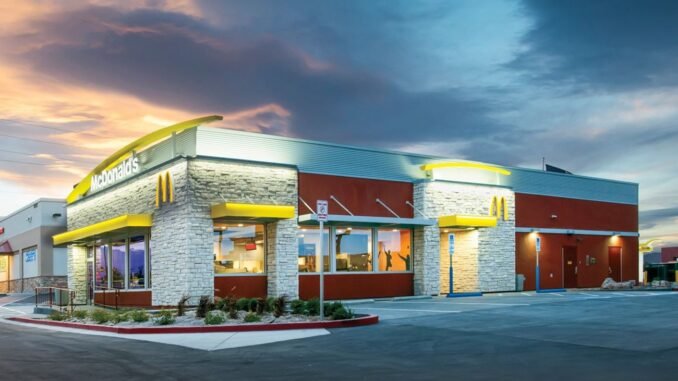
- McDonald’s: Franchise fee $45,000. Total investment: $1.3M – $2.5M. Requires $500,000 liquid assets minimum. Royalty: 4% + rent (often 10%+ of sales). The gold standard, and priced like it. McDonald’s does not sell to absentee owners; expect to work in the restaurant.
- Chick-fil-A: Franchise fee only $10,000, famously low. But Chick-fil-A selects operators (not owners, you do not own the location or equipment) through an intensely competitive process (acceptance rate under 1%). Total startup effectively $0 out of pocket beyond the fee, but you earn an operator salary/profit share rather than owning equity.
- Subway: Franchise fee $15,000. Total investment: $230,000 – $550,000. Among the cheapest major brands. Royalty 8% + 4.5% ad fund. Note: market saturation and franchisee profitability concerns are well-documented; research current owner satisfaction carefully.
- Taco Bell: Franchise fee $45,000. Total investment: $575,000 – $3.4M. Requires $750,000 net worth, $350,000 liquid. Royalty 5.5%.
- Wendy’s: Franchise fee $50,000. Total investment: $2M – $3.7M. Requires $5M net worth, $2M liquid for new franchisees. Premium tier.
- Dunkin’: Franchise fee $40,000-$90,000. Total investment: $500,000 – $1.7M. Royalty 5.9% + ad fund.
- Domino’s: Franchise fee $25,000. Total investment: $365,000 – $665,000. Strong unit economics; over 90% of US franchisees started as delivery drivers or in-store workers.
- Popeyes: Franchise fee $50,000. Total investment: $380,000 – $2.5M. Royalty 5%.
Beyond the Franchise Fee: The Real Costs
- Build-out and equipment: The biggest chunk. $200,000-$1M+ for construction, kitchen equipment, signage, furniture.
- Real estate: Lease deposits, or land purchase ($500,000+ in good locations). Location quality determines success more than any other factor.
- Initial inventory and supplies: $20,000-$50,000.
- Working capital: $50,000-$150,000 for the first months before cash flow stabilizes.
- Ongoing royalties: Typically 4-8% of gross sales plus 2-5% advertising fund contributions. On $1M in sales, that is $60,000-$130,000/year off the top, before your other expenses.
- Required remodels: Franchisors mandate periodic renovations ($150,000-$750,000 every 7-10 years). Budget for this from day one.
How Franchisees Actually Make Money
- Owner-operator profit: Well-run quick-service franchises net 10-15% of sales before debt service. A $1.2M/year location might net $120,000-$180,000 to the owner working full-time in the business.
- The multi-unit game: Real wealth in franchising comes from owning 3-10+ units, where management overhead spreads across locations. Single-unit ownership is a job; multi-unit is a business.
- Payback period: Typically 3-7 years to recoup initial investment on successful units.
- Failure exists: Franchisees fail, especially with poor locations, undercapitalization, or weak operations. The FDD’s financial performance representations (Item 19) show real numbers; study them.
Due Diligence: Non-Negotiable Steps
- Read the entire FDD (Franchise Disclosure Document), especially Items 7 (costs), 19 (financial performance), and 20 (franchisee turnover). High closure/transfer rates are a red flag.
- Call 15-20 existing franchisees (contact info is in the FDD). Ask: “Would you do it again? What surprised you? How long until profitable?” Current owners give the truth no brochure will.
- Hire a franchise attorney ($2,000-$5,000) to review the agreement before signing. Non-negotiable at these investment levels.
- Validate the location independently. Traffic counts, demographics, competition, visibility, access. The franchisor approves sites, but it is your money.
- Secure financing early: SBA 7(a) loans are the most common franchise financing (10-20% down typically). Franchisor financing programs exist for some brands.
Alternatives Worth Considering
- Emerging franchises: Lower fees ($20,000-$40,000), less saturation, but unproven systems. Higher risk, higher potential.
- Food trucks/carts: $50,000-$150,000 all-in. Test concepts and build capital before committing to brick-and-mortar.
- Independent restaurant: No royalties or fees, full creative control, but no brand recognition, systems, or support. Higher risk, higher reward.
The Bottom Line
Franchising a popular fast food restaurant costs $230,000-$550,000 for value brands like Subway, $500,000-$1.7M for Dunkin’, and $1.3M-$2.5M+ for McDonald’s, plus 4-8% royalties and 2-5% ad funds ongoing. Read the FDD completely, call 15-20 existing franchisees, hire a franchise attorney, validate the location independently, and understand that real wealth comes from multi-unit ownership. It is a proven path to business ownership for those with capital and operational discipline, not a passive investment.
Quick Answers to Common Questions
What is the cheapest fast food franchise to open?
Among major brands, Subway ($230,000-$550,000 total) and Dunkin’ (from ~$500,000) are the lowest all-in costs. Emerging and regional franchises can run $100,000-$250,000. Chick-fil-A’s $10,000 fee is famously cheap but selection is brutally competitive and you do not own equity. Remember: cheapest entry does not mean best returns; evaluate unit economics, not just startup cost.
Do franchise owners make good money?
Well-run quick-service franchises net 10-15% of sales before debt service; a $1.2M location might yield $120,000-$180,000 to a full-time owner-operator. Multi-unit owners scale significantly. But ranges are wide: poor locations and weak operations lose money, and royalties plus ad funds take 6-13% off the top regardless. Study the FDD’s Item 19 financials and talk to existing franchisees before believing any income claim.
Can I get a loan to buy a franchise?
Yes, SBA 7(a) loans are the most common franchise financing, typically requiring 10-20% down. Franchisors often have preferred lender relationships that streamline approval. Your total borrowing need includes the franchise fee, build-out, equipment, and working capital, not just the fee. Strong personal credit (680+) and the liquid capital requirements brands demand are prerequisites.
Is owning a franchise better than starting independent?
Franchises offer proven systems, brand recognition, training, and support, with higher startup costs, ongoing royalties, and limited independence. Independent restaurants keep all profits and full control but face higher failure rates without brand or systems. Choose franchising if you value proven playbooks and can follow them; choose independent if you have a distinctive concept and entrepreneurial experience. The FTC’s franchise buying guidance is required reading before signing anything.
Leave a Reply