
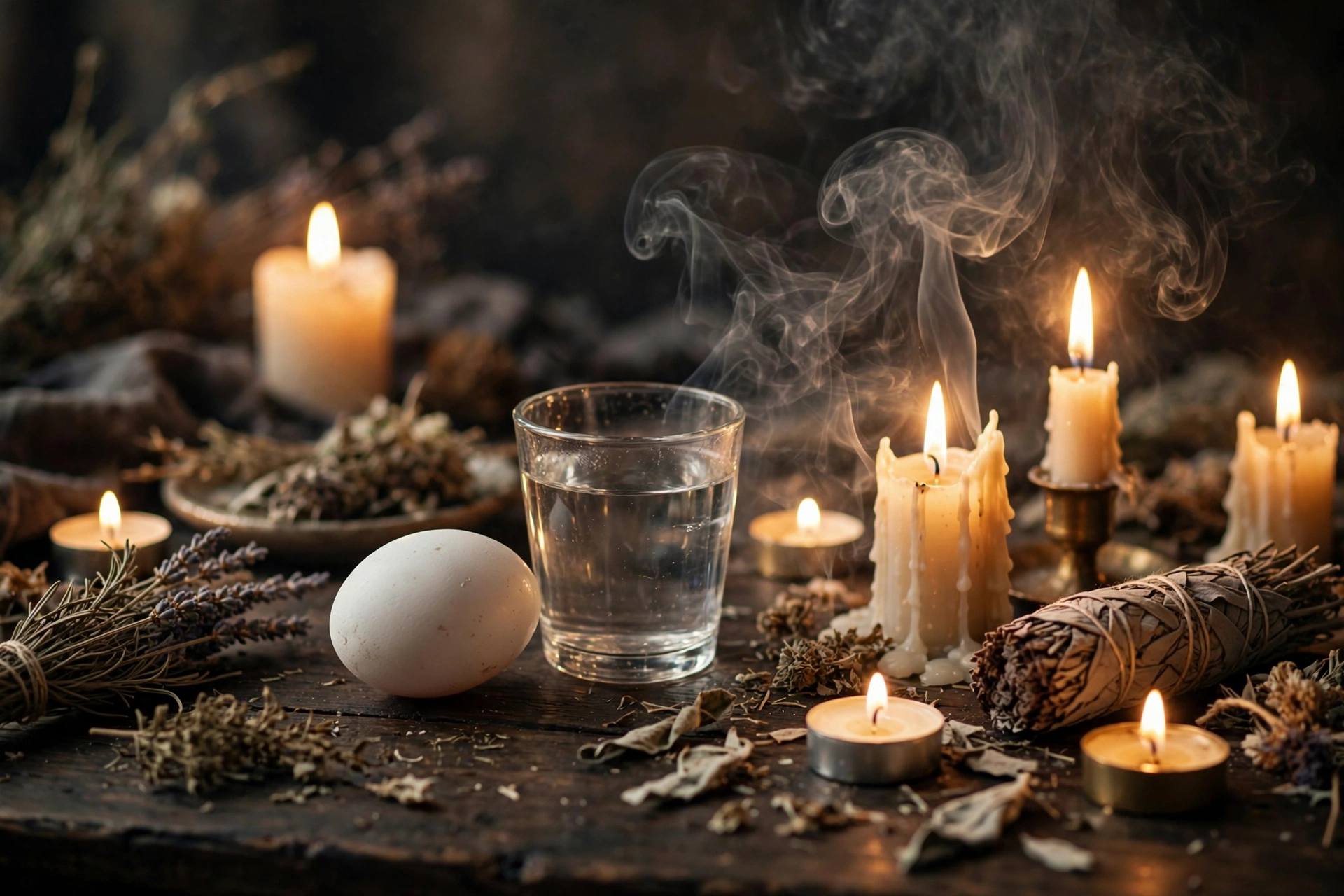
An egg cleanse — known in Spanish as limpia con huevo — is a traditional spiritual practice found across Latin America, parts of Southern Europe, and increasingly in wellness circles in the United States. The idea: a raw egg absorbs negative energy, bad luck, or spiritual heaviness from a person’s body, and the patterns left in the egg afterward can be “read” like a spiritual diagnostic.
Whether you approach it as sacred tradition, cultural curiosity, or symbolic ritual, here’s what the practice involves, where it comes from, and how people actually do it.
Where the Egg Cleanse Comes From
Egg cleansing has deep roots in Mesoamerican spiritual traditions, where eggs were seen as vessels of life force capable of drawing out illness and spiritual imbalance. Spanish colonization blended these practices with Catholic folk traditions, producing the curanderismo healing framework still practiced today — in which the limpia (cleansing) is a core ritual performed by healers known as curanderos.
Similar egg rituals appear independently around the world: in parts of West Africa, the Balkans, and the Philippines, eggs feature in divination and cleansing rites. The related practice of reading patterns in eggs even has its own name in the Western occult tradition — oomancy, or divination by eggs — documented since ancient times.
What People Believe It Does
Practitioners describe the egg cleanse as serving two purposes:
- Cleansing: Drawing out mal de ojo (the evil eye), envy, negative energy, spiritual heaviness, or the residue of stressful experiences.
- Diagnosis: Reading the egg afterward to identify what’s affecting the person — similar to reading tea leaves, but with egg white patterns.
It’s worth being straightforward: there is no scientific evidence that eggs absorb “energy” in any measurable sense. Believers would respond that the ritual works on a spiritual level science isn’t designed to measure — and that the comfort, intention-setting, and cultural connection it provides are real regardless. Approach it with respect for the tradition and honest expectations.
How to Do an Egg Cleanse: Step by Step
What you need
- One fresh, room-temperature raw egg (many practitioners prefer white eggs; some use brown — tradition varies by region)
- A clear glass of room-temperature water
- Optional: florida water or blessed water, herbs like rue or rosemary, a white candle
- A quiet space where you won’t be interrupted
The ritual
1. Set your intention. Hold the egg in your hands. Many practitioners pray, state their intention aloud (“remove any negative energy from me”), or ask for protection. The intention-setting is considered essential — the egg is a tool, not magic on its own.
2. Optional preparation. Some traditions call for washing the egg in florida water or salt water first, or passing it through incense or candle smoke to “activate” it.
3. Roll the egg over the body. Starting at the top of the head, slowly roll or rub the egg over the entire body — forehead, face, neck, arms, torso, legs, down to the feet. Move downward, as if drawing things out and down. Many people pray or repeat affirmations throughout. Take your time; rushing defeats the purpose.
4. Crack the egg into the water. Carefully crack the egg into the clear glass of water. Let it settle for 5–10 minutes without disturbing it.
5. Read the egg. Observe the yolk, the whites, bubbles, and shapes. (Interpretations below.)
6. Dispose of it respectfully. Traditions vary: flush it down the toilet (“returning” the negativity to the earth/water), pour it at the base of a tree away from the home, or sprinkle with salt before discarding. Don’t consume it.
How to Read the Results
Interpretation is folk tradition, not science — different curanderos read signs differently. Common interpretations include:
- Clear water, yolk sunk normally: No significant negative energy; you’re spiritually clear.
- Bubbles rising: Some negative energy was absorbed — the cleanse did its work.
- Cloudy or murky whites: Heaviness, stress, or envy directed at you.
- Spikes or needles in the whites: Often read as mal de ojo or people speaking against you.
- A figure or face in the whites: Traditionally interpreted as a specific person sending negative energy.
- Blood spots: In some traditions, a sign of strong negative forces or illness — practitioners may recommend repeating the cleanse or consulting a healer.
- The yolk breaks: Some read this as a sign the cleanse encountered heavy resistance.
- Whites form a web or cobweb: Sometimes interpreted as being “trapped” by a situation or person’s influence.
Remember: these are traditional readings, and anxiety-prone people can spiral reading ominous signs into ordinary egg physics. Egg whites naturally form strands, bubbles, and cloudy patches. Take interpretations lightly unless you’re working within the tradition with a knowledgeable practitioner.
When and Why People Do It
- After a streak of bad luck or a difficult period
- Before important life events (a new job, a move, a wedding)
- When feeling spiritually “heavy,” drained, or inexplicably anxious
- For children believed to be affected by mal de ojo (a very common use in Latin American families)
- As a regular spiritual hygiene practice, like energetic housekeeping
A Note on Respect and Context
The egg cleanse is a living religious and cultural practice, not an aesthetic wellness trend. If you’re outside the tradition, approach it as a student: learn about curanderismo, understand what the ritual means to the people who practice it, and don’t strip it of context for social media content. The ritual’s power, for believers, comes from faith, intention, and cultural lineage — not from the egg alone.
If you’re exploring spiritual practices around forgiveness and renewal more broadly, our piece on how to ask God for forgiveness covers the major religious frameworks for spiritual cleansing — and how God became God traces the history of the divine concept itself.
The Bottom Line
An egg cleanse is a traditional ritual of rolling a raw egg over the body to absorb negative energy, then reading the patterns in a glass of water. It’s culturally rich, spiritually meaningful to millions, and scientifically unproven — all of which can be true at once. If you try it, do so with intention, respect for its origins, and a grounded perspective on what the results mean.
Curanderismo: The Wider Healing Tradition
The egg cleanse doesn’t exist in isolation — it’s one ritual within curanderismo healing traditions, the folk-healing systems of Latin America that blend Indigenous, Spanish, and African influences. Curanderos treat susto (soul loss from fright), empacho (digestive blockage), mal de ojo, and other folk illnesses with herbal remedies, prayer, massage, and limpias. Understanding this context matters: the egg cleanse is one tool in a coherent medical-spiritual system, not a standalone party trick. People who benefit most from it are typically those embedded in the tradition, working with knowledgeable practitioners — not tourists sampling rituals.
Egg Cleanses for Children and Homes
The ritual adapts beyond individual adults:
- For children: Parents commonly perform gentle egg cleanses on fussy babies or children believed affected by mal de ojo. The rolling is lighter, the prayers often include protective blessings, and many families treat it as routine childcare rather than a special event.
- For homes: Some practitioners roll an egg along doorframes and through rooms to cleanse a space after arguments, illness, or moving into a new home — then dispose of it outside the property.
- For couples or families: Group limpias before weddings or major transitions are common in some communities.
In each variation, the core logic is identical: the egg draws out what doesn’t belong, and the reading reveals what was there.
How to Find a Legitimate Practitioner
- Ask within the community. The best curanderos are found by word of mouth in Latin American communities, not Google ads.
- Be wary of upselling. A practitioner who diagnoses catastrophic curses requiring expensive follow-up “cures” is a red flag in any tradition.
- Respect the framework. Don’t haggle over prices like it’s a flea market, don’t treat the ritual as entertainment, and follow the practitioner’s instructions for disposal and aftercare.
- Know when to see a doctor. Traditional practitioners themselves will tell you: limpias address spiritual ailments. Physical symptoms need medical care. The two systems complement each other; neither replaces the other.
Leave a Reply