
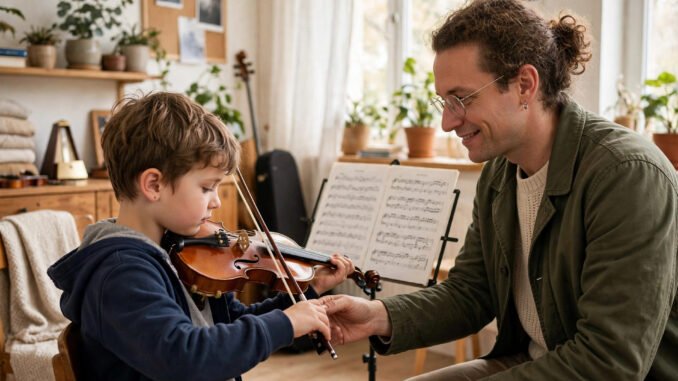
One side of the conversation promises a sharper mind and a stronger college application. The other side is a bill that lands every month, often for years, before anyone knows if a child even likes the instrument. Both sides deserve a fair hearing. Signing up in a rush, or refusing on price alone, can each be the wrong call.
The useful question is narrower than most parents first ask it. It is not whether music is good in some general sense. It is whether lessons make sense for this child, with this teacher, at this price, in this season of family life. A yes for one household can be a clear no for another, and both answers can be sensible.
The Case For: What Lessons Genuinely Offer
Start with the research, stated plainly. Studies link music training with stronger attention, better memory for patterns, and readiness for school tasks. That link shows up often enough to take seriously. What the evidence does not support is the strong claim that lessons raise IQ. Parents should set that promise aside. It is not the reason to enroll a child.
What does develop, week after week, is easier to see at home. A child learns to sit with a hard passage and work it in small pieces. Progress comes slowly, then suddenly. A short piece that felt impossible in September gets played clean in November. That experience teaches patience with slow progress in a way few other childhood activities match so directly.
Lessons also teach a child to perform under mild pressure. A recital is not a test with a grade. Still, hands shake, hearts race, and the music has to keep going. Children who get through those moments carry something useful into class presentations, tryouts, and interviews later on. The skill is not talent. It is staying steady while people watch.
There is also the long view. An instrument learned well can stay with a person for decades. Adults who played as children often pick the skill back up in their twenties, thirties, or later, and it comes back faster than starting cold. Few childhood classes offer that kind of second life. A season of soccer ends. A feel for an instrument tends to linger.
Music is social, too, once a child gets past the first solo months. School ensembles, youth orchestras, and informal groups give children a room where effort is normal and older students set the standard. For many families, that wider picture of music education and how children learn it is part of the appeal. The weekly lesson is only the center of a larger world.
School band and orchestra deserve a special mention here. They are often the best value in all of music education. Many schools offer them free or at low cost, with instruments arranged through the school itself. A child gets instruction, a group to play with, and a reason to practice, all in one place. If your school offers it, look there first.
The Case Against: The Honest Costs
Money comes first, because it should. Private lessons typically cost $25 to $60 per half-hour in most US markets. Weekly lessons at that rate run about $100 to $240 a month. Spread across a school year, weekly lessons come to roughly $1,000 to $2,400. Those figures surprise many parents who only heard the per-lesson price at sign-up.
The instrument adds its own layer. Rent first. Band and orchestra instruments usually rent for about $20 to $50 a month, and schools often arrange the rental for you. Starter guitars and keyboards run $150 to $400 to buy. A decent digital piano starts from around $500, though it never needs tuning, which softens that price over time.
Then come the extras that rarely make the brochure. Books, reeds, strings, and recital fees add up to roughly $50 to $100 a year. Put it all together and a realistic all-in first year on the private route is about $1,200 to $3,000. Through a school program, the same year can cost dramatically less, sometimes close to nothing beyond a rental fee.
Time is a cost, too, and parents pay most of it. Someone drives to the lesson. Someone sits nearby while a young child practices. Someone gives up an evening for a concert or recital. None of that is wasted time when a child is thriving. It feels very different when every practice session turns into an argument at the kitchen table.
Expect the year-two dip. Novelty carries many children through the first year. Somewhere around months 12 to 18, the newness fades and practice starts to feel like a chore. Progress slows at the same moment, which makes the chore feel pointless. This dip is normal. It is not proof that lessons failed. Still, families should know it is coming before they blame the child.
A poor fit can sink the whole effort. A strict teacher can frighten a shy child. A loose teacher can bore a driven one. A forced instrument is just as risky. A child who begged for drums and got handed a violin has been set up to quit. The fix is usually a change of teacher or instrument, not more pressure at home.
The Decisions That Actually Matter
Instrument choice matters more than most buying guides admit. Logic says pick piano because it teaches reading well. Fascination beats logic almost every time. Let the child try two or three instruments before you commit. Visit a music store together. Ask the school about an instrument try-out day. Watch which instrument the child keeps drifting back to.
Age matters, but there is no single magic birthday. At ages 4 to 6, group classes built around play and rhythm suit most children best. Private lessons at that age often feel too structured. Private lessons commonly land best around ages 7 to 9, when reading skills and attention have caught up with what a teacher asks for in a half-hour session.
Older starters do fine, and often do better than parents expect. A child who starts at 10 or older usually progresses fast and chooses the instrument with real intent. Nobody has missed the boat at that age. The famous early-start route, the Suzuki method, begins young children by ear with a parent closely involved. It works well for some families and asks a lot of them. Treat it as one respected option, not a deadline.
Format shapes both cost and staying power. Private lessons give a child full attention and a pace set just for them. Group lessons cost less and add friends, which helps some children stay. School programs add the ensemble from the start. If one format fails, a different format is worth trying before you conclude that music itself is the problem.
A good teacher is easy to spot once you know what to watch for. The child leaves the lesson able to say what to practice. The teacher explains in plain words, corrects kindly, and still expects real work. Trial lessons exist for a reason. Take one. A teacher your child likes and respects will carry the hard months far better than a famous name your child dreads.
Verdict: Worth It, With Clear Exceptions
For most children who show real interest, with a teacher who fits and a budget that does not strain the household, lessons are worth it. The return is not a higher test score. It is a practiced skill, steadier habits, and a door into a social world that can last for years. Bought at school-program prices, the value is hard to beat.
Be just as clear about when the answer is no. Lessons are not worth it when a child is enrolled only to serve a parent’s ambitions. They are not worth it when the monthly strain breeds resentment that lands on the child. And if three different formats have each failed after a fair try, park the idea. Try again in a year. Children change fast, and a no at eight can be an eager yes at ten.
The quitting question deserves a calm answer before it arrives. Agree on a trial term at the start, often a school term or a set number of months. Review it together when the term ends. A child who quits after a fair trial has given you information, not a failure. Fighting through month after month of misery teaches nothing about music. It only teaches a child to dread it.
What helps any skill stick is well understood, and it applies to children as much as to adults learning late. Short, steady practice beats weekend marathons. Clear goals beat vague effort. Enjoyment beats fear every time. Parents weighing this choice can borrow the same lessons from the best way to learn a new skill: protect a small daily slot, praise effort over talent, and keep the whole thing social where you can. Do that, and the invoice starts to look like what it should be: payment for something your child is actually gaining.
Leave a Reply