
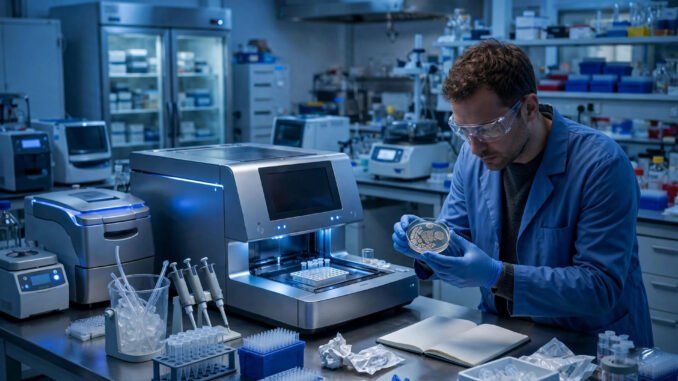
If you’ve ever wondered how much it costs to truly understand CRISPR gene editing — the classes, the courses, the hands-on learning — while living in Denver, Colorado, you’re asking a smarter question than you think. Because CRISPR has two very different price tags: what it costs to learn about it, and what the actual gene-editing treatments cost. One ranges from free to a few hundred dollars. The other runs into the millions. This guide breaks down both, with a Denver-specific lens, so you know exactly what “understanding CRISPR” costs in real money in 2026.
By the end, you’ll know the free resources that teach CRISPR better than most textbooks, the paid options worth your money, what Denver’s own research scene offers, and why approved CRISPR therapies carry seven-figure price tags — plus what that means for the future of medicine.
First, the Honest Answer: Learning CRISPR Is Nearly Free
Let’s separate the two questions immediately. Understanding how CRISPR works — the science, the mechanism, the ethics — costs somewhere between $0 and about $500 in Denver, depending on how deep you go. The expensive part is receiving CRISPR therapy, which is a different universe entirely. Most people asking this question want the learning costs, so let’s start there and work up.
The reason learning is cheap is that CRISPR education has been radically democratized. The technique was only described as a programmable editing tool in 2012 (by Jennifer Doudna, Emmanuelle Charpentier, and colleagues), and the Nobel Prize followed in 2020. Since then, universities, biotech companies, and science communicators have flooded the internet with free, high-quality explainers — because the science benefits from public understanding.
The Free Tier: $0 and Genuinely Excellent
You can build a solid working understanding of CRISPR without spending a dollar, and Denver residents have some local advantages.
Online resources that beat textbooks
The National Human Genome Research Institute’s CRISPR explainer is the single best free starting point — accurate, plain-English, and maintained by the scientists who fund the research. Add the Howard Hughes Medical Institute’s BioInteractive CRISPR animations, which show the guide-RNA-and-Cas9 mechanism in motion, and you have a better conceptual foundation than most undergraduates had five years ago.
For video learners, the Innovative Genomics Institute (co-founded by CRISPR pioneer Jennifer Doudna) publishes free lectures and Q&As. MIT OpenCourseWare and Coursera both host genetics courses with CRISPR modules that you can audit free — Coursera’s audit mode gives you all the lectures, just not the certificate.
Denver’s local free options
The Denver Museum of Nature & Science regularly runs genetics and biotechnology programming, and its permanent health-science exhibits provide the cell-biology foundation CRISPR builds on. The University of Colorado Anschutz Medical Campus — one of the country’s major biomedical research hubs, right in nearby Aurora — hosts public lectures and open-house science events where working researchers explain gene editing to general audiences. The Denver Public Library system also stocks the key popular-science books (Walter Isaacson’s The Code Breaker is the essential CRISPR narrative) and offers them free with a library card.
The Paid Tier: $50 to $500 for Structured Learning
Free resources are superb for understanding, but some learners want structure, credentials, or hands-on lab time. Here’s what that costs in 2026.
Online certificates ($49–$300): Coursera and edX offer verified certificates in genetics and genome editing courses, typically $49–$150. These are worth it only if you want the credential for a résumé — the learning content is identical to the free audit versions.
Community college courses ($300–$500): The Colorado Community College System, including Community College of Denver and Front Range Community College, offers introductory biotechnology and genetics courses. In-state tuition makes a single course surprisingly affordable, and you get actual lab exposure — pipettes, gels, and (in some programs) CRISPR-adjacent exercises with harmless bacterial systems.
DIY bio kits ($100–$200): Companies like The Odin sell CRISPR experiment kits for home use — typically editing bacteria or yeast, never anything that could affect you. These are legal in Colorado for educational use and give you genuine hands-on experience with guide RNA design. Budget another $50–$100 for a basic lab setup (micropipettes, agar plates).
The honest assessment: for pure understanding, the free tier gets you 90% of the way. Pay only if you want lab skills or a credential.
The Other Price Tag: What CRISPR Therapy Actually Costs
Now the number that stops conversations: the first FDA-approved CRISPR therapy, Casgevy (for sickle cell disease and beta thalassemia, approved December 2023), launched with a U.S. list price of $2.2 million per patient. Vertex’s pricing reflects a one-time curative treatment replacing a lifetime of transfusions, hospitalizations, and pain crises — health economists debate whether it is “worth it,” but the math compares lifetime disease costs against one infusion.
Why so expensive? Manufacturing is the bottleneck. Each dose is made from the patient’s own edited stem cells — a bespoke, weeks-long process in specialized facilities. The clinical trials registry at ClinicalTrials.gov lists dozens of ongoing CRISPR trials, and the field’s central bet is that prices collapse as manufacturing scales, the way monoclonal antibodies fell from exotic to routine over two decades.
For Denver residents, the practical relevance: CU Anschutz Medical Campus runs clinical trials in gene and cell therapy, and trial participation is typically free to patients. If CRISPR therapy ever becomes relevant to your family, trials — not list prices — are the realistic access path in the near term.
Why “Understanding” Costs So Little but “Doing” Costs Millions
This gap confuses people, but it makes sense: knowledge is non-rivalrous — the explanation of how Cas9 cuts DNA can be copied infinitely at zero cost, which is why the NIH gives it away. Therapy is rivalrous and regulated: every dose needs cleanrooms, quality control, and liability coverage. The $0 explainer and the $2.2 million drug are the same science at different pipeline stages — one is information, the other is a manufactured medical product.
Your Denver Learning Plan: A Sensible Budget
Here’s a practical path, cheapest-first:
Budget $0: NHGRI explainer + BioInteractive animations + Isaacson’s The Code Breaker from Denver Public Library + one Anschutz public lecture. Total understanding: solid conversational fluency, enough to read news coverage critically.
Budget $150: Add a Coursera verified certificate in a genetics course for your résumé, plus a used copy of a molecular biology textbook.
Budget $400: Add a community college biotech course with lab sessions — the only option that gives you real bench skills.
Pair your learning with general health literacy — understanding what a basic health checkup costs without insurance and how to tell if you have a vitamin D deficiency — and you’ll be better equipped than most to evaluate medical news of all kinds, CRISPR included.
Conclusion: The Knowledge Is Free; The Therapy Is the Expensive Part
How much does understanding CRISPR gene editing really cost in Denver? For genuine understanding: nothing, if you’re resourceful, or a few hundred dollars for structured courses and lab time. The millions belong to a different question — the cost of receiving therapy, where bespoke manufacturing drives prices to $2.2 million per treatment today. Start with the free NIH resources, follow one clinical trial for a few months, and you’ll understand CRISPR better than most of the people arguing about it online — at a total cost of zero dollars.
Frequently Asked Questions
Can I learn CRISPR for free in Denver?
Yes. The NHGRI website, HHMI BioInteractive, Coursera audit-mode courses, Denver Public Library books, and CU Anschutz public lectures are all free and collectively provide an excellent education in how CRISPR works.
Why does CRISPR therapy cost $2.2 million?
Casgevy’s price reflects bespoke manufacturing — each dose is made from the patient’s own edited cells in specialized facilities — plus the economics of a one-time cure replacing lifetime disease management. Prices are expected to fall as manufacturing scales.
Are DIY CRISPR kits legal in Colorado?
Yes, for educational use on microbes like bacteria and yeast. Federal and state law prohibit using them on humans, and reputable kit sellers design their products accordingly. They are a legitimate, affordable way to get hands-on experience.
Is CU Anschutz involved in CRISPR research?
The University of Colorado Anschutz Medical Campus is a major biomedical research institution running gene and cell therapy research and clinical trials. Its public lectures and open events are among Denver’s best free science resources.
Will CRISPR therapies ever be affordable?
Most researchers expect costs to fall substantially over the next decade as manufacturing automates and competition grows — similar to how other biologics became routine. Insurance coverage battles and trial access will shape affordability more than the raw technology cost.
Leave a Reply