
Rabbits are the most underestimated pet in America. People buy them on impulse — Easter, a cute pet-store moment — expecting a low-effort cage animal, and discover instead a complex, social, litter-trainable creature with the emotional range of a cat and the destructive enthusiasm of a toddler. So is understanding rabbit care basics actually worth it for a beginner? If you’re considering a rabbit: absolutely, because the gap between expectation and reality is where most rabbit welfare problems live. And if you already have one: even more so, because almost everything “everyone knows” about rabbit care is outdated. Here’s the real beginner’s guide.
First: Unlearn What You Think You Know
The classic image — a rabbit alone in a small hutch in the backyard, eating carrots — is essentially a welfare failure in every detail. Modern rabbit care, as taught by the House Rabbit Society and rabbit-savvy veterinarians, looks completely different:
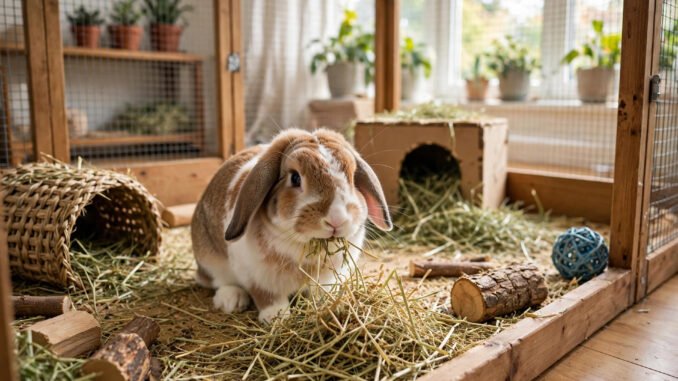
Rabbits are not cage animals. They need space to run, jump (binkies — the joyful leaps), and explore for several hours daily. A hutch is a bedroom, not a home. The minimum realistic setup: an exercise pen (x-pen) of at least 4×4 feet as a base, plus daily free-roam time in a rabbit-proofed room.
Rabbits are social and shouldn’t live alone. In the wild they’re colony animals. A single rabbit kept alone in a hutch is a lonely rabbit. Bonded pairs are the gold standard — and bonded rabbits are calmer, healthier, and less destructive than lonely ones.
Carrots are candy, not food. The Bugs Bunny diet is a myth. The actual diet: unlimited timothy hay (80%+ of intake), measured high-fiber pellets, fresh leafy greens daily, and sugary vegetables and fruits only as rare treats. The wrong diet causes the #1 killer of pet rabbits: gastrointestinal stasis, a life-threatening shutdown of the digestive system.
Rabbits live 8–12 years. This is not a short-commitment pet. It’s a decade-long relationship — longer than many dogs’ lifespans.
The Real Cost and Effort (Honest Numbers)
Startup: $150–$300 for an x-pen setup, litter boxes, hay rack, water bowl (bowls, not bottles — bottles restrict intake), hideouts, and initial hay/litter supply. Adopting from a rabbit rescue ($50–$100, usually already spayed/neutered) versus buying from a breeder or pet store.
Ongoing: roughly $50–$80/month — hay in bulk (the big expense; buy by the bale from farm stores, not tiny pet-store bags), pellets, fresh greens, litter. Plus an emergency vet fund, because…
Veterinary care is the hidden cost. Rabbits are exotic pets in veterinary terms — they need a rabbit-savvy (exotic) vet, not just any dog-and-cat practice. Spay/neuter runs $200–$500+ and is strongly recommended (unspayed females have an extremely high rate of uterine cancer; neutering dramatically improves litter habits and behavior). Emergency treatment for GI stasis can run $500–$2,000. This is the expense that blindsides beginners most.
Time: 1–2 hours daily of direct interaction and free-roam supervision, plus weekly enclosure deep-cleans. Rabbits are crepuscular (most active dawn and dusk) — their schedule, not yours.
Worth it? If you want an interactive, trainable, genuinely affectionate pet and can meet these needs — yes, enormously. Rabbits learn their names, come when called, do agility courses, and bond deeply. If you wanted a pet you could leave in a cage all week — no, and it’s kinder to realize that before adopting. For honest comparison, low-maintenance pets for apartment living ranks the alternatives fairly — rabbits sit in the middle: more demanding than fish, less than dogs.
Housing: The Setup That Actually Works
Forget the pet-store “rabbit cage” — nearly all are too small. The beginner setup that works:
Base: a 42-inch exercise pen (or two joined) on a washable floor covering. Rabbits need solid flooring — wire floors cause a painful condition called sore hocks. Cover with low-pile rugs, fleece, or foam tiles.
Litter box: yes, rabbits litter-train — reliably, often within days. Use a large cat litter box with paper-based or wood-pellet litter (never clay clumping litter — dangerous if ingested; never cedar or pine shavings — respiratory irritants). Place hay directly in or above the litter box: rabbits eat and eliminate simultaneously, and this single trick trains them fastest.
Enrichment: cardboard boxes, tunnels, willow balls, dig boxes filled with shredded paper. A bored rabbit is a destructive rabbit — and rabbit destruction means chewed baseboards, eaten phone chargers, and stripped wallpaper. Rabbit-proofing (covering wires with split-loom tubing, blocking baseboards) is mandatory for free-roam time, not optional.
Flooring options for homes with pets is genuinely useful here — rabbit urine can stain, and choosing the right floor protection under the pen saves real money and stress.
Diet: The Part That Keeps Them Alive
This deserves emphasis because diet mistakes kill rabbits. The hierarchy:
Unlimited timothy hay (or orchard grass), always available. This is 80%+ of the diet. It wears down constantly growing teeth (dental disease from insufficient hay is common and serious) and keeps the gut moving. A rabbit not eating hay is a rabbit heading toward stasis — treat hay refusal as an early warning sign.
Measured timothy-based pellets: about 1/4 cup per 5 lbs of body weight daily for adults. Not the colorful “gourmet mixes” with seeds and dried fruit — plain, high-fiber pellets.
Fresh leafy greens daily: romaine, cilantro, parsley, dandelion greens, bok choy — roughly 1 cup per 2 lbs of body weight. Introduce new greens one at a time.
Treats (rarely): small pieces of apple, banana, carrot — teaspoon-sized portions, occasionally. Yogurt drops and seed sticks sold in pet stores are junk food; skip them.
Fresh water daily in a heavy bowl (changed daily), plus unlimited hay. That’s the entire diet. Simple, cheap in bulk, and non-negotiable.
Health: What Beginners Must Know
GI stasis is the emergency. If your rabbit stops eating, stops pooping, sits hunched, or grinds teeth loudly — this is a veterinary emergency, not a “wait and see.” Stasis can be fatal within 24–48 hours. Every rabbit owner should know their emergency exotic vet’s number and have critical-care food (Oxbow Critical Care) on hand.
Spay/neuter is healthcare, not optional. Beyond population control: unspayed females face up to an 80% rate of uterine cancer by age 5; neutering eliminates spraying, reduces aggression, and makes litter training dramatically more reliable.
Rabbits hide illness. As prey animals, they mask symptoms until they’re seriously ill. The corollary: any behavior change — not eating, hiding, sitting hunched, reduced pooping — warrants prompt vet attention. “Wait and see” kills rabbits.
Nails, teeth, and grooming: nail trims every 4–6 weeks, weekly brushing (daily during heavy sheds — ingested fur contributes to gut slowdowns), and never bathe a rabbit (they can go into shock; spot-clean only). Never pick rabbits up by the ears — support the hindquarters always; their spines fracture easily if they kick out while held insecurely.
The House Rabbit Society is the authoritative beginner resource, and the AVMA’s rabbit care guidance covers veterinary essentials.
Conclusion
Is understanding rabbit care basics actually worth it for a beginner? It’s not just worth it — it’s the difference between a thriving decade-long companion and a welfare tragedy. The basics are straightforward: spacious pen housing (not a tiny cage), unlimited timothy hay as the dietary foundation, a bonded companion if possible, spay/neuter as healthcare, a rabbit-savvy vet on speed dial, and the knowledge that GI stasis is an emergency. None of it is difficult; all of it contradicts the pet-store mythology most beginners arrive with. Learn it before you adopt, and you’ll get one of the most rewarding — and most misunderstood — pets in the animal kingdom, on purpose instead of by accident.
Frequently Asked Questions
Are rabbits good pets for beginners?
They can be, with realistic expectations. Rabbits are litter-trainable, quiet, and deeply affectionate — but they need spacious housing, daily free-roam time, specialized vet care, and a 10+ year commitment. They’re moderate-difficulty pets: easier than dogs, harder than the “cage pet” reputation suggests.
What do rabbits actually eat?
Unlimited timothy hay (80%+ of the diet), measured high-fiber pellets, fresh leafy greens daily, and water. Carrots, fruit, and sugary treats only in tiny amounts occasionally. The hay is non-negotiable — it maintains dental and digestive health.
Can rabbits live alone?
They survive alone but thrive in bonded pairs. Rabbits are colony animals; single rabbits need significantly more human interaction to stay happy. If you can manage two (ideally a spayed/neutered pair), do it — they’re calmer and less destructive together.
How much does a rabbit cost per month?
Roughly $50–$80/month for hay (bought in bulk), pellets, greens, and litter — plus vet costs. The real budget item is veterinary care: spay/neuter ($200–$500+) and emergency stasis treatment ($500–$2,000), which is why an emergency fund matters.
Do rabbits really need to be spayed or neutered?
Yes. Unspayed females face extremely high rates of uterine cancer; neutering dramatically improves litter habits, reduces spraying and aggression, and enables safe bonding with a companion. It’s considered essential healthcare by rabbit veterinarians, not optional.
Leave a Reply