
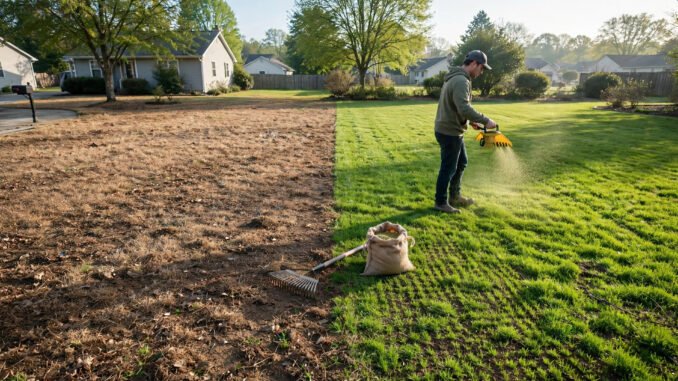
A patchy lawn is a lawn telling you something, and what it’s saying is usually fixable for the price of a bag of seed. Every spring, millions of homeowners stare at thin, brown, weedy patches and assume the answer is expensive: a lawn service contract, a full re-sod, some miracle product. The actual answer is older and cheaper — overseeding and spot-reseeding, done at the right time with the right seed, for $30 to $80 total. Here’s how to reseed a patchy lawn without wasting money: diagnose first, time it right, and skip everything the garden center hopes you’ll buy.
Diagnose Before You Seed
Seed can’t fix what seed didn’t cause. Walk your lawn and read the patches. Grub damage: brown patches that peel back like carpet, revealing white C-shaped grubs underneath — treat the grubs (beneficial nematodes or targeted grub control), then reseed. Shade: thin grass under trees where even good seed struggles — this needs a shade-tolerant seed mix (fine fescues) or acceptance that mulch beds beat grass under dense canopy. Compaction: hard, worn areas along paths and play zones where water pools — aerate before seeding, or seed will sit on concrete-like soil and die. Dog spots: small dead circles from urine nitrogen burn — flush the area with water, lightly rake, and reseed; no product prevents it, only dilution and quick repair. Just thin: general thinning with no clear cause — the classic overseeding candidate. This diagnosis step is where money gets wasted: reseeding a grub-eaten lawn without treating grubs is buying seed for the beetles’ children. Ten minutes of investigation saves a season of disappointment.
Timing: Fall Is King
For cool-season grasses (Kentucky bluegrass, fescues, perennial ryegrass — most of the northern US), early fall is the undisputed best seeding window: soil is still warm for germination, air is cooling (less heat stress on seedlings), weeds are winding down, and fall rains do your watering. Late August through September in most northern zones. Spring is the second choice — seed germinates fine, but young grass then faces summer heat before its roots are deep, and crabgrass competes aggressively. If you must seed in spring, use a starter fertilizer and consider a crabgrass preventer labeled safe for new seedings (most standard preventers block grass seed too — read the label). Warm-season grasses (bermuda, zoysia, St. Augustine) flip the calendar: late spring to early summer, when soil temperatures pass 65°F. Seeding at the wrong time is the most common way homeowners waste seed — the bag wasn’t defective, the calendar was.
The No-Waste Method, Step by Step
1. Mow short and bag. Cut the patchy areas down to about 2 inches and bag the clippings — seed needs soil contact, and thatch and tall grass block it. 2. Rake aggressively. For patches, a garden rake scratched hard across the area is enough; for whole-lawn overseeding, rent a dethatcher or slit-seeder for a half day ($50–$75 rental beats buying). You’re creating seed-to-soil contact — the single biggest factor in success. 3. Test the soil (often free). Your state’s cooperative extension service tests soil for a few dollars or free and tells you exactly what the lawn needs; guessing with lime or fertilizer is how people waste $40 fixing a problem they don’t have. 4. Choose the right seed. Match your existing grass type (take a photo to the garden center or extension office if unsure), buy certified seed with 0% weed seed on the label, and ignore the giant bags — seed coverage rates are generous, and leftover seed stores fine in a cool dry place. 5. Seed at the labeled rate. More seed is not more lawn; overseeding rates exist because crowding causes disease. 6. Top-dress lightly. A thin layer (¼ inch) of compost or peat moss over the seed retains moisture — compost from your own pile is free and superior. 7. Water correctly. Keep seed consistently moist (light watering 1–2 times daily) until germination, then transition to deeper, less frequent watering. Seed that dries out during germination dies — inconsistent watering wastes more seed than anything else. Skip the “starter fertilizer” unless your soil test calls for phosphorus; most lawns don’t need it, and the EPA’s WaterSense guidance reminds us that excess fertilizer mostly feeds waterways, not lawns.
What Not to Buy
The garden center aisle is designed to separate you from money. Skip: “patch repair” mixes at 3x the price of plain seed (it’s seed plus mulch plus fertilizer you may not need — buy the components separately for a third the cost), weed-and-feed applied at seeding time (the herbicide prevents your new seed from germinating — this mistake is epidemic), premium “miracle” seed blends with unproven claims (certified seed of a known variety beats marketing), and full lawn-service overseeding packages ($300–$600) when a $60 DIY job does the same work — the service’s advantage is equipment and labor, not secret knowledge. Also skip seeding without addressing the cause (see: diagnosis), and skip the temptation to seed in midsummer because you’re impatient. For the bigger picture of low-maintenance landscaping ideas for a front yard, consider whether some struggling lawn areas should become beds or groundcover instead — the cheapest lawn repair is sometimes less lawn. And a thick, healthy lawn you grow yourself does more for improving your home’s curb appeal cheaply than almost any other single project.
The Honest Cost Comparison
DIY spot-reseeding: one bag of quality seed ($15–$30 covers up to 1,000+ sq ft for overseeding), compost top-dressing (free to $10), water (pennies per session) — total $30–$80. DIY full-lawn overseeding with a rented slit-seeder: add $50–$75 rental — total under $150. Professional overseeding service: $300–$600 for an average lawn. Full re-sodding: $1,500–$4,000+. The pro service buys you convenience and equipment, not better outcomes — a careful homeowner with a rake and a hose matches pro results routinely. Re-sodding is for lawns that are truly dead (over 50% weeds or bare), not patchy ones. Most “patchy” lawns are 80% fine grass with 20% problems, and overseeding the 20% is the entire job. For technique deep-dives, This Old House’s lawn guides walk through the seasonal calendar with the patience of people who’ve done it for decades.
Reseeding a patchy lawn without wasting money is really a discipline: diagnose the cause, seed in fall, ensure seed-to-soil contact, water consistently, and buy nothing but seed (and maybe a soil test). The lawn doesn’t need your money — it needs your timing. Do it right once, and the patches fill in like they were never there; do it wrong expensively, and you’ll be buying seed again next spring. The grass, as always, is patient. Be smarter than the garden center aisle.
Frequently Asked Questions
When is the best time to reseed a lawn?
Early fall for cool-season grasses (late August–September in northern zones) — warm soil, cool air, fewer weeds, natural rainfall. Late spring to early summer for warm-season grasses. Spring seeding works for cool-season lawns but faces more weed competition and summer heat stress.
Can I just throw seed on the bare patches?
Throwing seed on unprepared ground gives poor results — seed needs soil contact to germinate. Rake the patch hard to expose soil, seed at the labeled rate, cover lightly with compost, and keep it moist. Ten minutes of prep doubles your success rate.
How much does it cost to reseed a lawn yourself?
$30–$80 for spot repairs (seed plus optional compost), under $150 for full-lawn overseeding including a half-day slit-seeder rental. Professional overseeding runs $300–$600; re-sodding $1,500–$4,000+.
Why did my new grass seed fail?
The usual suspects: seeding at the wrong time, seed drying out during germination (inconsistent watering), no seed-to-soil contact (seed sitting on thatch), applying weed-and-feed simultaneously (herbicide kills new seedlings), or an underlying problem like grubs or shade that seed can’t fix.
Should I use straw to cover new seed?
A light compost or peat moss top-dressing is better — straw can introduce weed seeds and blows around. If you use straw, use weed-free straw and apply it thinly enough that you can still see soil through it.
Leave a Reply