
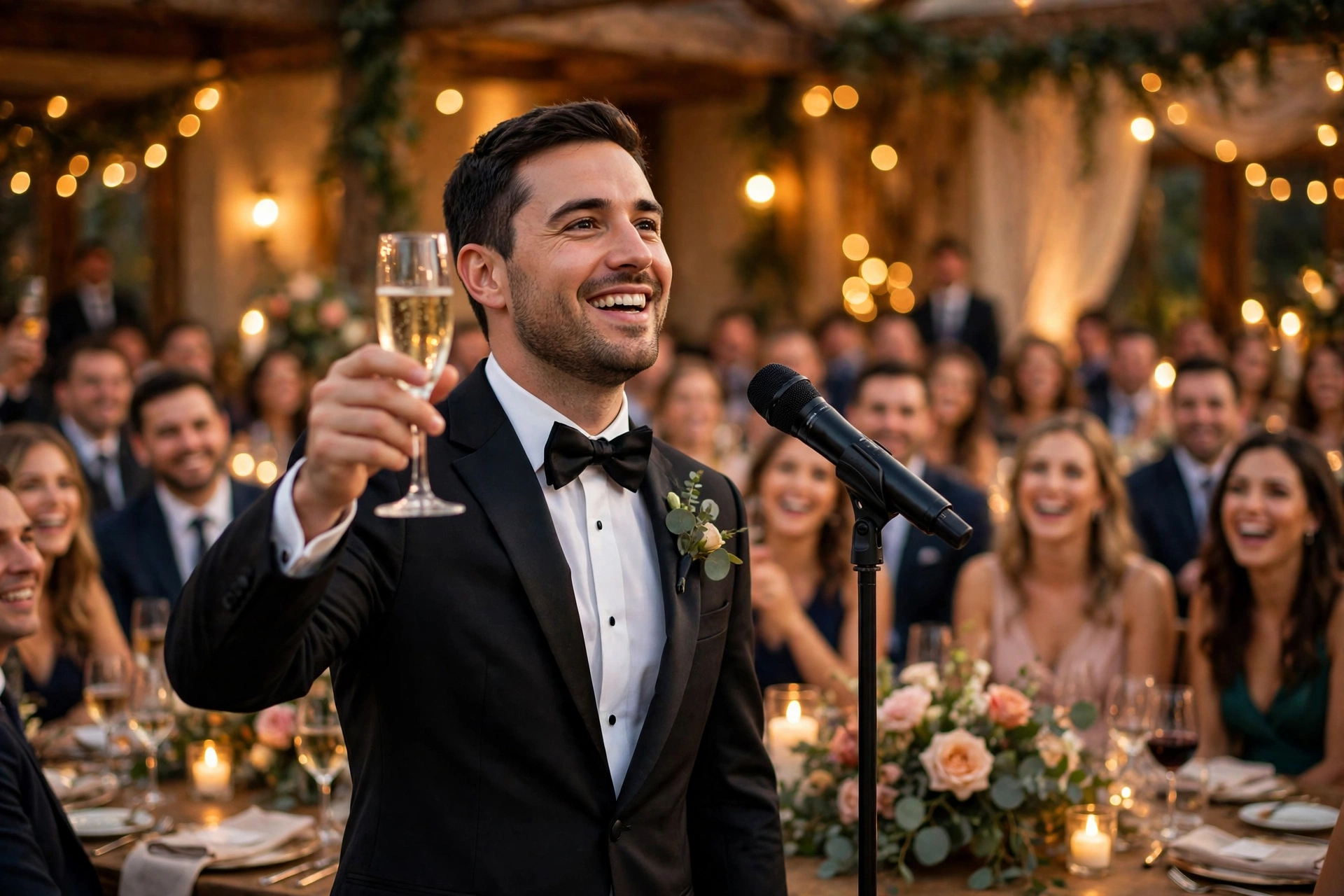
If you have been asked to be best man, congratulations — and condolences, because now you have to give a speech. The first question every best man asks is: “How long should a best man speech be?” The answer the wedding industry and every relieved audience agrees on: three to five minutes. That is roughly 400 to 650 spoken words — shorter than you think, and exactly as long as it should be.
Why 3–5 Minutes Is the Sweet Spot
Five minutes feels substantial to the speaker and breezy to the audience. Go much longer and you will watch the crowd’s attention drift toward the bar; go much shorter and it feels like you did not try. Wedding planners consistently report that the best-received speeches land in this window. Remember, you are one part of an evening with dinner, dancing, and other toasts — the wedding reception timeline depends on speakers who respect the clock.
A Structure That Always Works
Do not stare at a blank page. Use this framework and fill in your own stories:
- Introduce yourself (30 seconds). Name, how you know the groom. Half the room does not know you.
- Thank the key people (30 seconds). The couple, the hosts, the wedding party — brief and sincere.
- Stories about the groom (2 minutes). One or two good stories that show his character. Funny is great; humiliating is not.
- Welcome the partner (30 seconds). Say something genuine about the bride or groom’s partner and the couple together.
- The toast (30 seconds). Raise the glass, deliver a warm closing line, drink.
Choosing Stories: The Grandmother Test
Before including any anecdote, run it through the grandmother test: would you tell this story with both grandmothers listening? Ex-girlfriends, embarrassing drunken episodes, and inside jokes nobody else understands all fail the test. The best stories are funny and affectionate — the time he drove six hours to help you move, the childhood scheme that reveals who he has always been.
What to Avoid
- Reading off your phone. Notes on a card are fine; scrolling a glowing screen is not.
- Too much alcohol beforehand. Liquid courage becomes slurred courage fast. One drink, maximum.
- Props and gimmicks. They almost never land as well as you imagine.
- Roasting the bride. Your material is about the groom; keep his partner out of the jokes.
- “For those who don’t know me” rambling. Introduce yourself once and move on.
Delivery Tips From People Who Give Speeches
Practice out loud at least three times — silently reading does not count, because spoken pacing is completely different. Time yourself with a phone stopwatch. Make eye contact with the couple and the room, not your notes. Speak slower than feels natural; nerves speed everyone up. And have water nearby.
If you are terrified of public speaking, consider wedding toast advice from planning sites, or even one session with a speaking coach. It is a short speech, but it is an important one.
The Maid of Honor and Other Toasts
The same 3–5 minute rule applies to the maid of honor and any parent toasts. If multiple people are speaking, coordinate so you are not all telling the same story, and the couple should cap total toast time around 15–20 minutes so dinner service stays on track.
Sample Closing Lines
End warm and simple. A few classics that never fail:
- “To [names] — may your life together be as happy as you have made everyone in this room tonight.”
- “I have known [groom] for [X] years, and I have never seen him happier than he looks right now.”
- “Everyone please raise a glass to the new Mr. and Mrs. [name].”
Then sit down to well-earned applause — and enjoy the rest of the night knowing you nailed it.
Handling Nerves: You Are Not Alone
Public speaking terrifies most people more than anything except maybe spiders, so if your hands shake at the thought of the toast, you are normal. A few things genuinely help: arrive at the venue early and stand where you will speak, so the spot feels familiar. Eat something — low blood sugar amplifies anxiety. And remember the audience is entirely on your side; a wedding crowd wants the best man to do well.
Beta-blockers are a legitimate option some speakers discuss with their doctors for performance anxiety, but for most people, preparation is the real cure. A well-rehearsed three minutes feels easy; an unprepared three minutes feels eternal.
Writing Timeline: Do Not Wing It
Start drafting at least two weeks before the wedding. Write a messy first version, cut it in half, then read it aloud and cut again. The final version should fit on one or two small cards — not a phone, not full sheets of paper flapping in your hands. Ask a trusted friend to listen once and flag anything that falls flat or crosses a line. Then stop tinkering; over-editing kills the natural warmth.
If You Are Doing a Joint Speech
Two best men (or a best man and maid of honor teaming up) can be delightful — or double the awkwardness. Rehearse together so the handoffs feel natural, agree on who says what, and keep the combined total under six or seven minutes. Alternate sections rather than reading alternate sentences, which gets gimmicky fast. And decide in advance who holds the cards.
Toasts in Different Cultures
Toast traditions vary: in some cultures the best man’s speech is the centerpiece of the evening; in others, parents speak first and friends keep it brief. If the wedding blends traditions, ask the couple what they expect. A quick question now prevents an awkward moment later — like toasting with the wrong drink or speaking out of turn in a formal sequence.
Whatever the tradition, the universal rules hold: keep it short, keep it kind, and end with the glass in the air.
Recovering From a Stumble
Even well-prepared speakers blank on a line or mispronounce a name. The recovery is simple: pause, smile, and say “let me try that again.” Audiences forgive stumbles instantly — what they do not forgive is a speaker who visibly panics and rushes. A sip of water buys you five seconds of composure. Nobody will remember the stumble; everyone will remember whether you seemed like you were having a good time.
The secret professionals know: the audience cannot see your nerves, only your behavior. Stand still, breathe, and keep going, and you will look confident even if your knees disagree.
After the Toast: Your Job Is Done
Once the glasses are down, resist the urge to apologize for the speech or ask everyone how it went. You did it — enjoy that. Mingle, dance, and be present for the rest of the night. Years from now, the couple will remember that you stood up and spoke from the heart far longer than they will remember any particular line. That is the whole job, and three to five honest minutes does it perfectly.
One last piece of advice from veteran best men: write the toast for the couple, not the crowd. The laughs are nice, but the moment they will replay in their heads is the sincere part — the thirty seconds where you told the room what their friendship means to you.
Leave a Reply