
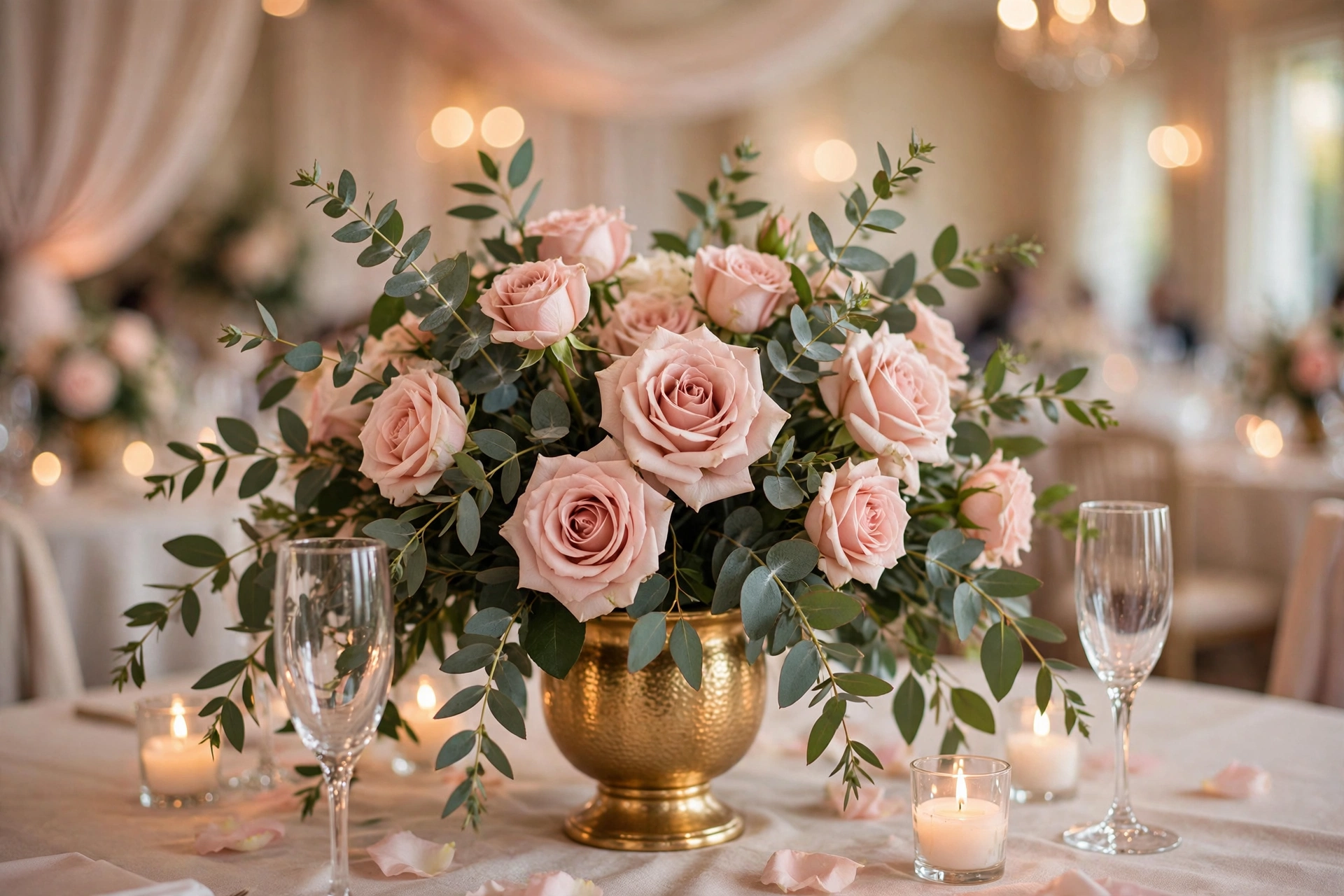
Centerpieces do more work than any other decor element at a reception — they set the tone for every table, show up in countless photos, and greet guests the moment they sit down. Knowing how to choose wedding table centerpieces that look stunning without breaking the budget (or blocking conversation) is one of the highest-impact planning skills you can learn.
Start With Your Budget and Venue
Before falling in love with anything, know two numbers: your per-table decor budget and your venue’s rules. Many venues restrict open flames, hanging installations, or confetti, and ceiling height determines whether tall arrangements will look dramatic or ridiculous. A grand ballroom swallows small bud vases; an intimate restaurant gets overwhelmed by towering candelabra.
As a rough guide, couples typically spend $50–$200 per table on centerpieces, with elaborate floral designs running higher. Multiply by your table count early — sticker shock is better now than later. When planning a wedding reception, decor is one of the easiest places to overspend, so set the number first.
The Golden Rule: Keep Sight Lines Open
The single most important centerpiece principle is that guests must be able to see each other. Professional planners swear by the rule: arrangements should sit below 14 inches or above 24 inches — low enough to talk over, or tall and narrow enough to talk under. The dead zone in between is where conversations go to die and photographers capture flowers instead of faces.
Popular Centerpiece Styles
- Lush floral compotes: Low, overflowing arrangements in footed bowls. Romantic, photogenic, and conversation-friendly.
- Tall statement pieces: Elevated arrangements or branched structures for drama in high-ceilinged rooms. Use sparingly — they cost more.
- Candle clusters: Groupings of pillar candles and votives at varying heights. Magical at evening receptions and budget-friendly.
- Greenery runners: Eucalyptus or ruscus garlands down long tables. Lush look for less than full florals.
- Non-floral designs: Lanterns, vintage books, potted herbs or succulents (which double as favors), fruit displays, or themed objects that reflect your story.
Mix High and Low
One of the best designer tricks: alternate tall and low centerpieces across tables. It creates visual rhythm, photographs beautifully, and cuts costs since only half the tables need the expensive tall designs. Just keep the color palette consistent so the mix looks intentional rather than random.
Flowers: Getting the Most for Your Money
- Choose in-season blooms. Peonies in June, dahlias in September — seasonal flowers cost less and look fresher.
- Lean on greenery. Eucalyptus, ferns, and ruscus add volume at a fraction of bloom prices.
- Repurpose ceremony flowers. Bridesmaid bouquets, altar arrangements, and the ceremony arch can all move to the reception.
- Consider bud vases. A cluster of small vases with single stems looks effortlessly chic and costs little.
Browse wedding planning resources and wedding decor inspiration for seasonal flower guides before your florist consultation so you arrive informed.
Candles and Lighting
Never underestimate candlelight. A table with a modest floral arrangement plus a generous cluster of votives looks ten times more expensive after dark than it did in daylight. Confirm your venue’s flame policy — many allow enclosed votives even when they ban tapers — and consider LED candles for worry-free glow. Fairy lights woven through greenery runners are another high-impact, low-cost move.
DIY vs. Hiring a Florist
DIY centerpieces can save serious money, but be honest about the logistics: who buys the flowers, where are they stored, who arranges them the morning of, and who sets them on the tables? If the answer to any of those is a stressed bridesmaid, hire the florist. A hybrid approach works well — florist for the important tables, simple DIY candle clusters for the rest.
Final Checklist Before You Commit
- Can guests see each other across the table?
- Does it fit the venue’s rules and the room’s scale?
- Is the per-table cost times your table count within budget?
- Who sets it up, and who takes it down?
- Have you seen it mocked up — at least in photos?
Get those answers and your tables will look intentional, welcoming, and entirely yours.
Working With Your Florist: What to Ask
A good florist consultation feels like a collaboration, not a sales pitch. Bring your color palette, photos of styles you love, your table count, and your honest budget. Ask to see photos of their actual recent work — not stock images. Key questions: What flowers will be in season on my date? Can you work within my per-table budget? Do you handle setup and teardown? What happens to the arrangements afterward — can guests take them home?
Get the proposal in writing with flower varieties, quantities per table, and delivery and setup times specified. Vague proposals (“mixed seasonal florals”) lead to surprises; specific ones lead to the wedding you pictured.
Centerpieces for Different Venue Types
- Ballrooms: Go tall or go home — high ceilings demand height. Alternating tall and low arrangements prevents monotony.
- Barns and rustic venues: Wooden boxes with wildflowers, lanterns, and eucalyptus runners suit the setting perfectly.
- Restaurants: Keep it minimal — the space already has character. Bud vases and candles are plenty.
- Outdoor weddings: Weight everything down (wind is the enemy), skip delicate blooms that wilt in heat, and have a rain plan for the decor too.
- Modern lofts: Geometric terrariums, single-stem orchids, and sculptural branches match clean lines.
Personal Touches That Guests Remember
The centerpieces people talk about afterward are the personal ones: framed photos of the couple at the ages matching each table number, small potted herbs guests take home, books that matter to you stacked beneath candles, or a favorite travel photo from the city each table is named after. These details cost little and mean everything — they turn decor into storytelling.
Table numbers themselves deserve thought. Calligraphed cards, vintage frames, or small chalkboards all beat flimsy tent cards, and they photograph far better.
Timing: When to Finalize
Book your florist six to nine months out; finalize designs eight to twelve weeks before the wedding. Last-minute changes are possible but expensive, since flowers are ordered weeks ahead. Do a final walkthrough of quantities the week of the wedding, after your RSVP count is locked — nothing is sadder than paying for centerpieces for tables that do not exist.
What About the Head Table?
The head table or sweetheart table deserves special treatment — it is the most photographed table in the room. Go slightly more elaborate here: a fuller floral arrangement, extra candles, perhaps a greenery garland framing the front. If you are doing a sweetheart table for two, a single lush low arrangement plus candles is perfect; the couple themselves are the focal point. For a full head table, extend the design along its length so it reads as one intentional installation rather than a row of separate centerpieces.
Kid-Friendly and Practical Considerations
A few practical details separate smooth receptions from chaotic ones. If children are attending, avoid small loose elements they can swallow or throw, and skip tall fragile pieces on their tables. For elderly guests, keep arrangements low and the table uncluttered — reaching around decor for the salt is nobody’s idea of fun. Anyone with allergies will thank you for low-fragrance choices; lilies and hyacinths are beautiful but potent, while roses, orchids, and succulents are gentler.
And think about the end of the night: designate someone to collect vases and rentals, and let guests take flowers home — it is the best compliment your centerpieces can get.
Leave a Reply