
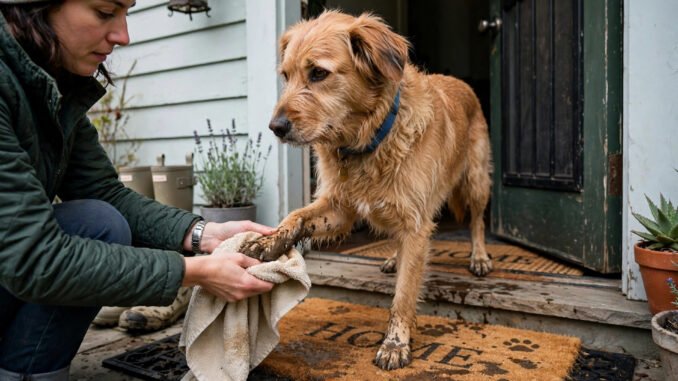
Rainy season. The dog door swings, and in trots forty pounds of joyful, mud-caked enthusiasm — straight onto your cream rug. Muddy paws are the eternal tax on dog ownership, and the pet industry will happily sell you $200 worth of “solutions.” But dealing with muddy paws without wasting money is mostly about systems, not products: a thirty-second routine at the door beats every gadget, and the few things worth buying cost less than one professional carpet cleaning.
The 30-Second Door Routine (The Whole Game)
Nearly all paw-mud problems are solved by what happens in the thirty seconds after the dog comes inside. Set up a paw station at the door you use most: a washable mat, a stack of old towels or microfiber cloths, and (for truly muddy days) a shallow basin of lukewarm water.
The routine: 1. Pause at the mat. Teach a “wait” at the door — ten seconds of impulse control that prevents the sprint-to-couch. 2. Wipe each paw. One towel per outing handles two dogs’ worth of paws; press, do not rub aggressively (rubbing grinds mud into fur). Pay attention between the toes, where mud packs and causes irritation. 3. Dip if needed. On swamp days, dip each paw in the basin and towel dry — the two-step removes what wiping alone cannot. 4. Release. “Okay!” and the dog is free, clean.
The ASPCA’s dog care resources reinforce the same principle: consistent, rewarded routines beat occasional deep-cleaning. Train the routine like any behavior: lure into position, treat for standing calmly, build duration. Within two weeks most dogs walk to the mat and offer paws automatically — it becomes a ritual they enjoy, especially with the treat payoff. This single habit eliminates 90% of muddy-paw damage, and it is free.
What to Buy (Under $50 Total, Lasts Years)
Washable entry mats: Two rugged, machine-washable mats ($15–$25 each) — one at the door, one as backup while the other washes. Look for rubber-backed, low-pile mats that trap dirt rather than decorative rugs that hide it. Microfiber towels: A 12-pack ($12–$15) dedicated to paws — microfiber grabs mud far better than cotton bath towels. Paw washer cup: The silicone-bristled cups ($12–$18) genuinely work — fill with water, insert paw, twist, done. Not magic, but faster and more thorough than towels for deep mud. Paw balm: $8–$12 — protects paw pads from the drying cycle of repeated washing, especially in winter. That is the complete kit: under $50, lasting years.
Do not buy: Automatic paw-washing machines ($60–$150 — the cup does the same job), “paw plunger” gimmicks with marginal reviews, expensive specialty shampoos for routine mud (lukewarm water works), or robot mops marketed for pet mess (they smear mud; they do not remove it). And if muddy paws are part of a bigger flooring battle, our guide to flooring options for homes with pets covers the permanent fix — hard floors with washable rugs beat wall-to-wall carpet for dog owners every time.
Yard and Walk Strategies (Less Mud at the Source)
The cheapest mud is the mud that never reaches the paws: Mulch the mud zones. The 3-foot strip along fences (where dogs patrol) and around the door turn to soup first — $30 of mulch or pine straw twice a year fixes it. Gravel paths: A simple gravel or paver path from door to yard ($50–$100 in materials) gives the dog a clean runway. Designate a “dog yard”: Fencing off a smaller, mud-managed section beats surrendering the whole lawn. Time walks smartly: After heavy rain, stick to paved paths for a day rather than the muddy trail — the dog gets the same walk, you skip the bath. Paw-friendly landscaping: Clover lawns and mulch beds withstand dog traffic better than pristine turf and generate less mud per paw.
For apartment dwellers, the equivalent is route planning: know which nearby paths drain well and which become bogs, and keep the paw station by the apartment door rather than wishing for a yard. Our roundup of low-maintenance pets for apartment living is honest about which animals fit small-space life — but committed dog owners make it work with systems like these.
When Mud Has Already Won (Damage Control)
For the prints already on the rug: let mud dry completely before cleaning — this is counterintuitive but critical. Wet mud smears; dry mud vacuums up. Once dry, vacuum thoroughly, then spot-clean with a 50/50 white vinegar and water solution (or an enzymatic cleaner, $8–$12, for set-in or smelly spots). Blot, never rub. For hard floors, a damp microfiber mop lifts dried mud effortlessly. The $150–$300 professional carpet cleaning you were about to book? Try the dry-vacuum method first — it resolves most incidents.
Paw Health: The Hidden Reason This Matters
Muddy paws are not just a cleaning issue — the American Kennel Club’s paw care guidance notes the same risks. Packed mud between toes causes interdigital irritation and yeast buildup; repeated wet-dry cycles crack paw pads; and roadside mud can carry de-icing salts and lawn chemicals. The door routine doubles as a health check — thirty seconds of paw handling lets you spot cuts, thorns, ticks, and cracked pads early. Keep paw balm applied in harsh weather, rinse after walks on treated lawns or salted sidewalks, and see a vet for persistent limping, swelling between toes, or pads that stay cracked despite care. Clean paws are healthy paws, and the routine that protects your floors protects your dog too.
Seasonal Paw Care Calendar
Spring: Peak mud season — keep the paw station fully stocked, mulch the fence-line patrol paths before the rains, and check for ticks during the wipe-down (they quest in spring grass). Summer: Mud fades but hot pavement arrives — walk early or late, test surfaces with your palm (too hot for you = too hot for paws), and rinse after walks on fertilized lawns. Fall: Wet leaves mat between toes — the wipe routine catches them; increase brushing as coats change. Winter: Salt and de-icers are the enemy — rinse paws after every walk on treated surfaces, apply paw balm preventively, and consider booties ($20–$30 for a set) for dogs with cracked pads or in heavily salted urban areas. Year-round, the thirty-second door routine never takes a season off — it is the constant that makes every season manageable.
Conclusion
Dealing with muddy paws without wasting money is a systems problem with a systems answer: a 30-second wipe-and-dip routine at the door (free, eliminates 90% of the problem), under $50 in mats, microfiber towels, and a paw-washer cup, plus yard strategies that reduce mud at the source. Skip the gadgets and the panic carpet-cleaner calls — let mud dry, vacuum, spot-clean. Your floors stay clean, your dog stays healthy, and the rainy season becomes a minor inconvenience instead of a daily disaster.
Frequently Asked Questions
How do I keep my dog’s paws clean after walks?
Set up a paw station at the door: wipe each paw with a microfiber towel (press, don’t rub), dip in lukewarm water on very muddy days, and towel dry. The 30-second routine prevents 90% of indoor mud.
Should I wash my dog’s paws every day?
Wiping daily is fine; full washing daily can dry out paw pads — use paw balm ($8–$12) if washing frequently, especially in winter or after walks on salted/treated surfaces.
What is the best product for muddy dog paws?
A silicone paw-washer cup ($12–$18) plus microfiber towels. Skip expensive automatic washers — the cup does the same job. Washable entry mats ($15–$25) complete the under-$50 kit.
How do I get mud out of carpet from dog paws?
Let it dry completely first (wet mud smears), vacuum thoroughly, then spot-clean with diluted white vinegar or an enzymatic cleaner. Blot, never rub.
Can muddy paws make my dog sick?
Mud itself is mostly harmless, but packed mud between toes causes irritation and yeast, and roadside mud can carry salts and lawn chemicals. The door-wipe routine doubles as a health check — rinse after walks on treated surfaces.
Leave a Reply