
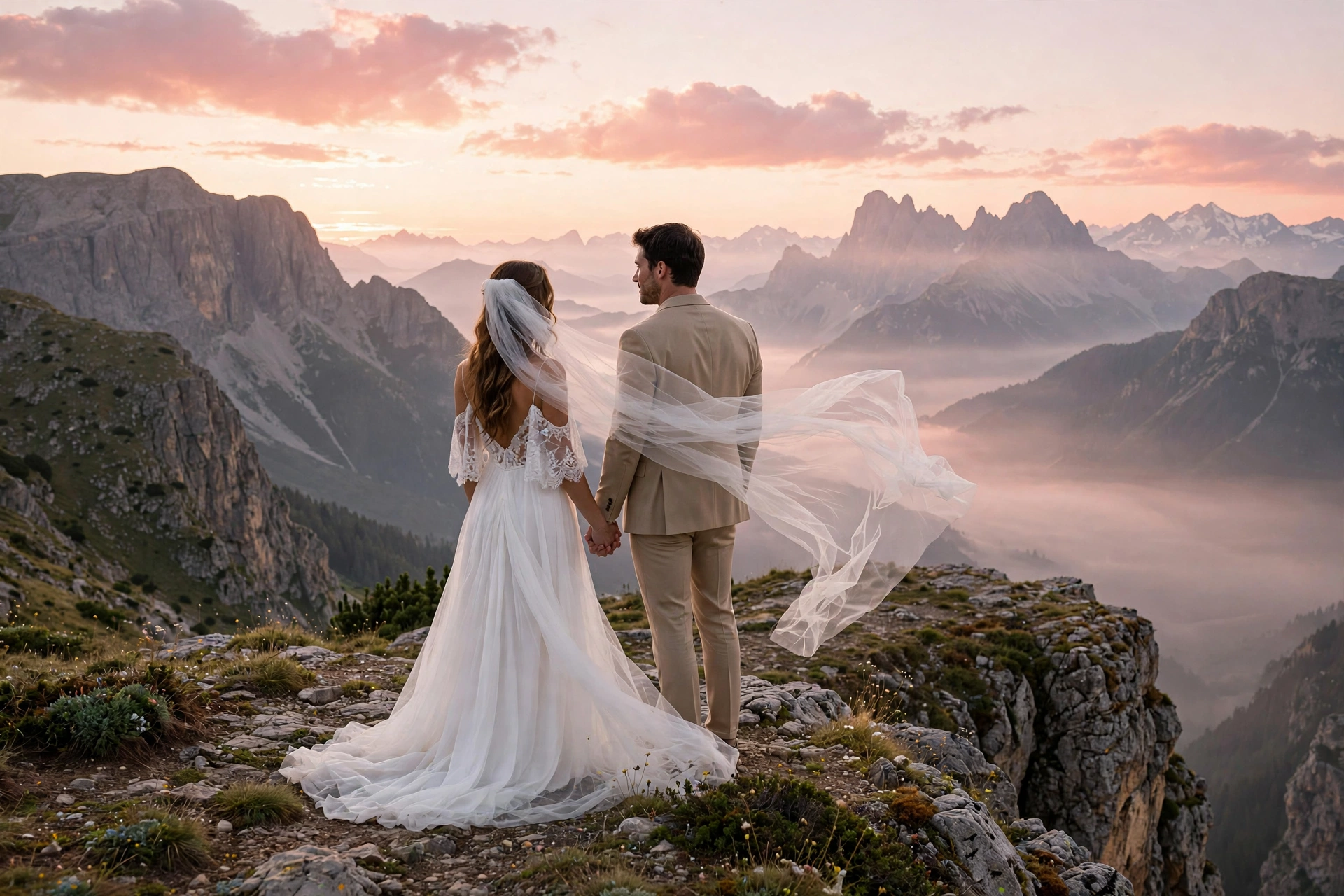
Eloping used to mean running off in secret. Today, it means something much better: a wedding focused entirely on the two of you — intimate, intentional, and free from the circus of a 150-person production. If you’re wondering how to elope, here’s the complete guide to doing it legally, beautifully, and without regrets.
What Eloping Means in 2026
Modern elopement isn’t a Vegas drive-through (though those still exist). Today’s elopements range from just-the-couple mountaintop vows to intimate gatherings of 10–20 loved ones in a stunning location. The defining feature isn’t secrecy — it’s intentionality. You’re choosing experience over performance.
Couples elope for all kinds of reasons: budget, family dynamics, love of adventure, or simply preferring a private moment to a public show. All are valid.
Step 1: Decide What Kind of Elopement You Want
- Just us two: The classic. You, your partner, an officiant, and a witness or two.
- Intimate gathering: 10–20 closest people. All the emotion, none of the production.
- Adventure elopement: Hiking to a summit, a beach at sunrise, a desert at golden hour. Photographers specialize in these.
- Destination elopement: A meaningful place — where you met, your favorite city, somewhere you’ve always dreamed of.
- Secret elopement + later party: Elope privately, then throw a casual celebration for family and friends afterward.
Step 2: Handle the Legal Requirements
An elopement is still a legal marriage. Requirements vary by state and country, but generally:
- Marriage license: Apply at the county clerk’s office where you’ll marry. Most states have a waiting period (1–5 days) between getting the license and the ceremony, and licenses expire (typically 30–90 days). Plan accordingly.
- Officiant: Must be legally authorized in that jurisdiction. Options include religious leaders, judges, and ordained friends (online ordination is legal in most states — check yours).
- Witnesses: Most states require 1–2 witnesses. Some states (like Colorado) allow self-solemnization — no officiant or witnesses needed.
- File the paperwork: After the ceremony, the signed license goes back to the county. You’re not married until it’s filed.
If you’re eloping abroad, research that country’s marriage laws carefully — some destinations require residency periods or additional documentation. The US State Department’s marriage abroad guide is the authoritative resource for Americans marrying overseas.
Step 3: Choose Your Location
Location is everything in an elopement. Considerations:
- Permits: National parks, beaches, and many public lands require permits for ceremonies — even tiny ones. Apply months ahead.
- Accessibility: That mountaintop is romantic until grandma can’t make the hike. Be honest about what your group can handle.
- Weather and timing: Sunrise and golden hour photograph beautifully and avoid crowds. Have a backup plan for rain.
- Privacy: Popular spots get crowded. Weekdays and off-season dates help.
Elopement photographers often double as location scouts — one more reason to hire one experienced in elopements specifically.
Step 4: Hire the Right Vendors (Yes, You Still Need Some)
Eloping doesn’t mean DIY everything. Consider:
- Photographer/videographer: The #1 priority. These photos are how you’ll share the day with everyone who wasn’t there. Hire someone whose elopement portfolio you love.
- Officiant: Even for two people, a good officiant makes the ceremony meaningful rather than transactional.
- Florist: A bouquet and boutonnière elevate the whole thing. And afterward, you’ll want to know how to preserve a bouquet — elopement flowers deserve the same care.
- Hair and makeup: Especially for adventure elopements — you want to look like yourself at your best, in wind and weather.
- Planner (for complex elopements): If permits, travel, and vendors are involved, a planner who specializes in elopements is worth it.
Step 5: Tell People (Or Don’t) — Thoughtfully
The trickiest part of eloping is often the people part:
- Decide in advance whether it’s a secret or just small. Secrets have a way of leaking — plan for that.
- Tell parents before social media. Finding out from Instagram stings.
- Frame it positively: “We wanted something intimate and personal” lands better than “we didn’t want a big wedding.”
- Consider a follow-up celebration. A casual party afterward lets everyone feel included without compromising your elopement.
- Send announcements. Beautiful elopement announcements (with photos) make people feel honored rather than excluded.
Budget: What Elopements Actually Cost
Elopements are cheaper than traditional weddings, but they’re not free. Realistic ranges:
- Ultra-simple: $500–$2,000 (license, officiant, a nice dinner).
- Typical elopement: $5,000–$15,000 (photographer, travel, flowers, attire, dinner).
- Luxury/adventure: $15,000–$30,000+ (helicopter, multi-day experience, high-end vendors).
Compare that to the average traditional wedding ($30,000+), and the savings are obvious — money you can put toward a house, travel, or just financial peace.
Make It Meaningful
Without the structure of a traditional wedding, it’s up to you to create meaning:
- Write your own vows. This is the heart of an elopement. Take time with them.
- Include a ritual. Handfasting, a unity candle, exchanging letters — something tactile and symbolic.
- Take your time. Don’t rush. Linger over the vows, take a walk together afterward, have a long dinner.
- Document it. Beyond photos, consider writing down how you felt, or recording video messages for each other.
Common Regrets (and How to Avoid Them)
- Skimping on photography. The #1 elopement regret. This is not the place to save money.
- Not telling key people. A secret elopement that hurts your mom isn’t worth it. Tell the people who matter.
- Rushing the day. Schedule buffer time. The best elopement moments are unplanned.
- Ignoring the legal details. Triple-check license requirements, waiting periods, and filing deadlines.
The Bottom Line
Learning how to elope is really about learning what matters to you as a couple. Strip away the expectations, the seating charts, and the performance — what’s left is two people making a promise. That’s the whole point, and it’s beautiful.
Whether you elope on a mountaintop or in a courthouse, the marriage is what counts. And if you later decide you want a bigger celebration, there’s no rule against organizing a fuller wedding experience down the road — many couples do both.
Elopement Announcement Wording
When you’re ready to share the news, keep announcements warm and simple. Examples:
- “We eloped! [Names] were married in an intimate ceremony on [date] in [place]. We can’t wait to celebrate with you soon!”
- “Just married — our way. [Names] exchanged vows privately on [date]. More celebration to come!”
- “Surprise! We’re married. [Names] eloped on [date] in [place], and our hearts are full.”
Include a favorite photo, send them promptly (within a few weeks), and consider adding details about any follow-up celebration. The goal is making people feel included in your joy, even though they weren’t there for the moment.
Eloping With Kids or Pets
Elopements can absolutely include children — many couples bring their kids, making the ceremony a family moment rather than just a couple’s one. Older kids can serve as witnesses or readers. As for pets, dogs at elopements are increasingly popular (flower-crown-wearing pups photograph beautifully), but check venue rules and have a designated handler — your officiant shouldn’t be holding the leash during vows.
The through-line of every good elopement is the same: strip away what doesn’t matter to you, invest deeply in what does, and let the day feel like yours rather than a performance for others.
Leave a Reply