
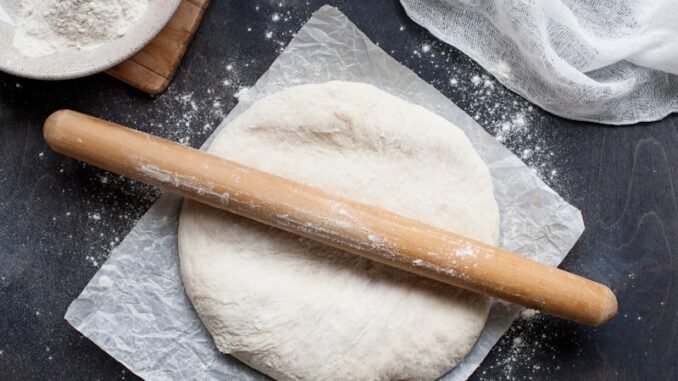
Homemade pizza dough sounds like a project, but the easiest way to make homemade pizza dough takes 10 minutes of active work — the yeast does the rest while you live your life. And the payoff is enormous: dough that costs under $1 per pizza, with chew and flavor that shames every $8 pre-made crust. I’ve made pizza weekly for years, tested every shortcut, and the method below is the one I give friends — simple enough for a Tuesday, good enough for a dinner party.
The Recipe (Makes Two 12″ Pizzas)
- 3 1/2 cups (440g) all-purpose flour (bread flour works too — slightly chewier)
- 1 1/2 cups (355ml) lukewarm water (not hot — hot kills yeast; think warm bath)
- 2 teaspoons instant yeast (1 packet — instant needs no proofing)
- 2 teaspoons salt
- 2 tablespoons olive oil (plus more for the bowl)
- 1 teaspoon sugar or honey (yeast food — feeds the rise, barely sweetens)
The Method (10 Minutes Active)
- Mix: whisk flour, yeast, salt, and sugar in a big bowl. Add water and olive oil; stir until a shaggy dough forms. No kneading required — seriously. (If you want to knead, 5 minutes by hand gives slightly better texture, but the no-knead version is 95% as good.)
- Rise: cover and let rise 1–2 hours at room temperature until doubled. Or refrigerate 24–72 hours — the cold ferment develops dramatically deeper flavor (this is the pizzeria secret; enzymes work slowly in the cold creating complex taste). The 3-day dough vs. 1-hour dough difference is staggering.
- Divide and shape: split in half, form loose balls, rest 20–30 minutes (relaxed gluten stretches without springing back).
- Stretch: on a floured surface, press from the center outward, leaving a 1-inch puffy rim for the crust. Never use a rolling pin — it crushes the air bubbles that make the crust airy. Gravity is your friend: drape over your knuckles and let it stretch.
- Top lightly: less is more — 1/3 cup sauce, 4–6 oz cheese per pizza. Overloaded pizzas steam instead of crisp.
- Bake HOT: 500–550°F (as hot as your oven goes) on a preheated pizza stone/steel ($30–$50 — the best pizza investment) or an overturned sheet pan, 7–10 minutes until spotted and bubbly.
What Is the Easiest Way to Make Homemade Pizza Dough? Troubleshooting
- Dough springs back when stretching: gluten is tense — rest 15 more minutes and try again. Patience, not force.
- Soggy center: oven not hot enough, too much sauce, or no preheated surface. Par-bake the crust 3–4 minutes before topping for insurance.
- Dough didn’t rise: yeast was dead (check expiration; proof in warm water with sugar — should foam in 10 minutes) or the room was too cold (oven with the light on = perfect proofing box).
- Tough crust: overworked dough or too much flour during shaping. Handle gently.
- Sticking to the peel: semolina flour or cornmeal under the dough ($4/bag) — ball-bearing effect. Shake the peel before launching; if the pizza doesn’t slide, lift edges and toss more semolina under.
Sauce and Topping Notes
- Sauce: a 28-oz can of crushed San Marzano tomatoes ($3–$4) + salt + a glug of olive oil, uncooked. That’s it — pizzeria sauce is uncooked. Simmered marinara belongs on pasta, not pizza.
- Cheese: low-moisture whole-milk mozzarella ($4–$5/lb), shredded yourself — pre-shredded has anti-caking starch that inhibits melting. Fresh mozzarella is delicious but watery — pat very dry and use sparingly.
- Cost per pizza: dough ($0.75) + sauce ($1) + cheese ($2.50) + toppings ($2) = under $7 for a pizza that beats $20 delivery.
Make the dough on Sunday (5 minutes), cold-ferment until Friday, and weeknight pizza becomes a 15-minute assembly job. King Arthur Baking‘s pizza guides confirm the cold ferment is the highest-impact variable — time is the ingredient you can’t buy. Ten minutes active, pennies in cost, pizzeria results. There’s no reason to buy dough ever again.
Pizza Dough Mistakes to Avoid
- Using a rolling pin: it crushes the air bubbles that make crust airy and chewy. Hand-stretch only — press from center outward, drape over knuckles, let gravity do the work.
- Overloading toppings: 1/3 cup sauce + 4–6 oz cheese per 12″ pizza — more steams instead of crisps. Restraint is the difference between pizzeria and soggy.
- Oven not hot enough: pizza needs 500–550°F (your oven’s max) on a preheated stone/steel. A lukewarm oven produces bready, pale crusts — heat is the ingredient most home ovens underdeliver.
- Skipping the cold ferment: 1-hour dough is fine; 24–72 hour cold-fermented dough is transcendent — enzymes develop deep, complex flavor in the cold. Time is the ingredient you can’t buy.
Homemade Pizza Dough FAQs
Can I make pizza dough without a stand mixer?
Absolutely — no kneading required. Stir until shaggy, let time do the work (the no-knead method is 95% as good as kneaded). If you want to knead: 5 minutes by hand. The yeast and the cold ferment do the heavy lifting, not your arms.
Why isn’t my dough rising?
Dead yeast (check expiration; proof in warm water + sugar — should foam in 10 minutes), water too hot (kills yeast — lukewarm only, like a warm bath), or room too cold (oven with the light on = perfect proofing box). Salt directly on yeast can also inhibit it — mix salt into flour first.
What’s the best flour for pizza dough?
Bread flour (higher protein = chewier crust) is the enthusiast pick; all-purpose works beautifully (slightly less chew). “00” flour (Caputo) is the Neapolitan standard — silky, best at very high heat. For home ovens at 500°F, bread flour is the practical winner.
How do I get a crispy crust?
Four factors: max oven temp (500–550°F), preheated stone/steel ($30–$50 — the best pizza investment), light toppings (less moisture), and par-baking the crust 3–4 minutes before topping for insurance. Semolina/cornmeal under the dough adds bottom crunch too.
Leave a Reply