
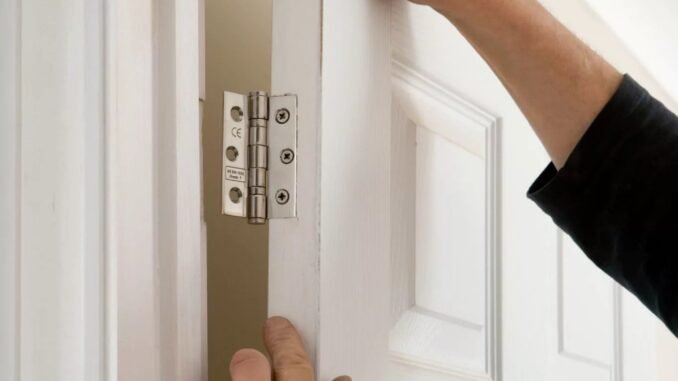
A door that won’t close properly announces itself constantly — the bedroom door that won’t latch, the bathroom door you have to hip-check, the front door that sticks every summer. Learning how to fix a door that won’t close properly starts with diagnosis, because the fix for a sagging door is completely different from the fix for a swollen one. I’ve fixed a dozen of these, and 90% took under 30 minutes once I identified the actual problem. Here’s the diagnostic flowchart.
Diagnosis: What’s Actually Wrong?
Close the door slowly and watch the gap around it (the reveal):
- Gap is wider at the top on the latch side, door drags at the bottom: the door is sagging — the top hinge is pulling out. (Most common.)
- Door sticks along the top or latch-side edge: the door or frame has swollen (humidity) or was always too tight.
- Latch doesn’t catch the strike plate: misalignment — the latch and strike plate no longer line up (house settling, hinge wear).
- Door won’t stay closed / pops open: the strike plate is misaligned or the door is binding on the frame.
- Whole door rubs everywhere: possible foundation settling shifting the frame — if multiple doors suddenly stick, investigate structurally before planing anything.
Mark the rub spots with painter’s tape or lipstick/chalk on the door edge — close it, and the transfer marks show exactly where it’s binding. Precision beats guessing.
Fix 1: The Sagging Door (Tighten + Long Screw)
The classic fix, works 70% of the time:
- Open the door and tighten all hinge screws — top hinge first. Often they’re just loose.
- If screws spin without gripping (stripped holes), remove one top-hinge screw (the one closest to the door center) and drive a 3-inch #9 screw in its place — it bites into the framing stud behind the jamb, pulling the whole door back up. This single screw fixes most sagging doors permanently.
- For badly stripped holes, pack with wooden golf tees + wood glue ($5), let dry, trim flush, re-drive the screw.
Fix 2: The Swollen/Sticking Door
- Seasonal swelling (sticks in summer, fine in winter): often best left alone — but if it must close, plane or sand the binding edge. Remove the door (tap hinge pins up), mark the rub area, and shave it with a block plane ($20–$30) or belt sander. Take off less than you think — 1/16 inch at a time, test-fit, repeat.
- Seal the edge: raw wood absorbs moisture and swells. After planing, paint or seal all six sides of the door (most people forget top and bottom edges — that’s where moisture enters).
- Quick temporary fix: rub a candle or bar soap on the binding spot — wax lubricates enough to get through the humid season.
Fix 3: Latch Misalignment
- If the latch barely misses the strike plate: file the strike plate opening slightly with a metal file ($8), or loosen the strike plate screws, shift it 1/16 inch, and retighten.
- If the door has dropped (latch hits below the strike): fix the sag first (Fix 1) — the latch problem is a symptom.
- Enlarge the strike mortise with a chisel if the latch needs more depth — go slowly, test frequently.
How Can I Fix a Door That Won’t Close Properly? When It’s Structural
Red flags that mean “not a DIY door fix”: multiple doors sticking simultaneously, visible cracks in walls near the door frame, the frame itself visibly out of square (check with a level), or a door that recently started sticking after years of working fine. These suggest foundation movement or framing issues — planing the door treats the symptom while the cause continues. Get a structural assessment ($300–$500) before modifying doors. But for the everyday single-door sag or seasonal stick — the long screw and the block plane handle it in under 30 minutes, and the satisfaction of a door that clicks shut properly is disproportionate to the effort.
Door Repair Mistakes to Avoid
- Planing the door before diagnosing: if the problem is a sagging hinge, planing removes wood you’ll miss when the hinge is fixed. Diagnose first (watch the gap as it closes, mark rub spots) — 70% of sticking doors are hinge issues, not size issues.
- Removing too much material: plane 1/16 inch at a time, test-fit, repeat. You can’t put wood back — and an over-planed door rattles in the frame forever.
- Forgetting to seal planed edges: raw wood absorbs moisture and swells again — paint or seal all six sides of the door (everyone forgets top and bottom edges; that’s where moisture enters).
- Ignoring sudden multi-door sticking: one sticky door = door problem. Multiple doors sticking suddenly = possible foundation movement — investigate structurally before modifying any doors.
Fixing Doors FAQs
Why won’t my door latch anymore?
Misalignment — the latch and strike plate no longer line up, usually from hinge sag (house settling, loose screws). Fix the sag first (tighten hinges, 3-inch screw into the stud) — the latch problem is usually a symptom, not the disease.
What’s the 3-inch screw trick?
Remove one top-hinge screw and drive a 3-inch #9 screw through the jamb into the framing stud behind it. It pulls the whole door back up, fixing most sagging doors permanently. The single highest-value door fix in existence.
My door sticks only in summer — what do I do?
Seasonal humidity swelling — often best left alone (it resolves in winter). If it must close: wax the binding spot (candle/soap) as a temporary fix, or plane minimally and seal all edges — unsealed planed wood just swells again next summer.
When is a sticking door a structural problem?
Red flags: multiple doors sticking simultaneously, visible wall cracks near frames, frames visibly out of square, or a door that worked fine for years then suddenly stuck. Get a structural assessment ($300–$500) before planing anything.
The Seasonal Stick: A Year in the Life
Track your sticky door for a full year before doing anything irreversible — the pattern tells you everything. Sticks in summer, fine in winter: humidity swelling — wax it and wait, or plane minimally and seal all six sides. Sticks year-round, gradually worsening: hinge sag or settling — the 3-inch screw fix. Suddenly sticks after years fine: investigate — new sticking is information (foundation, framing, moisture change). Multiple doors, same season: environmental (humidity) — whole-house humidity control (35–50%) rather than per-door surgery. The This Old House door guides are the best free reference for the diagnostic approach — their pros preach the same gospel: diagnose before you cut, because the fix for sagging is completely different from the fix for swelling, and the wrong fix makes everything worse.
Leave a Reply