
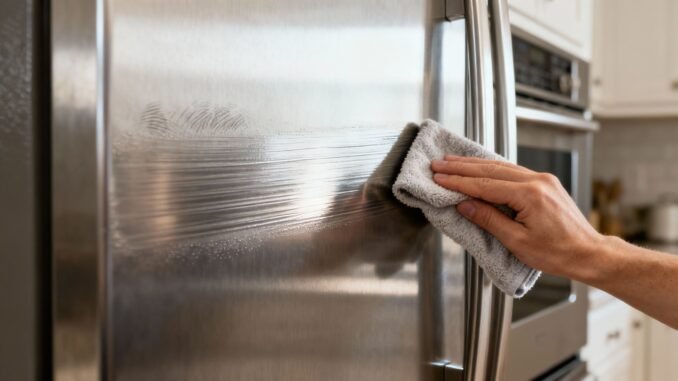
Stainless steel appliances look premium for exactly one day after purchase, then become a canvas of fingerprints, smudges, and water spots. The best way to clean stainless steel appliances isn’t a $12 specialty spray — it’s technique: cleaning with the grain, using the right cloth, and knowing what never to use. I’ve kept a full stainless kitchen streak-free for years with a $4 bottle of dish soap. Here’s the method.
The Core Technique (Works Every Time)
- Find the grain: look closely — stainless steel has faint directional lines (usually vertical on fridge doors, horizontal on dishwashers). Always wipe WITH the grain, never against or in circles. Wiping against the grain drives grime into the micro-grooves and causes streaking.
- Wash: a few drops of Dawn dish soap in warm water, applied with a microfiber cloth ($10 for a multi-pack — the only cloth that should touch stainless). Wipe with the grain.
- Rinse: damp clean microfiber, with the grain, removing soap residue. Soap residue is the #1 cause of “I cleaned it and it looks worse.”
- Dry and polish: immediately buff dry with a clean, dry microfiber, with the grain. Air-drying = water spots. This step is what separates streak-free from streaky.
That’s it. Dish soap, microfiber, grain direction. This handles 90% of stainless cleaning, costs pennies, and never damages the finish.
For Stubborn Spots and Fingerprints
- Fingerprints: a tiny amount of baby oil or mineral oil on a microfiber cloth, wiped with the grain — dissolves fingerprint oils and leaves a protective sheen. (Use sparingly — too much attracts dust.)
- Water spots / hard water: white vinegar on a microfiber cloth, with the grain, then rinse and dry. The acid dissolves mineral deposits.
- Grease near the stove: baking soda paste (gentle abrasive), with the grain, then wash and dry as above.
- Stuck-on food: soak with a damp hot cloth for 5 minutes to soften, then wipe — never scrape with anything metal or abrasive.
What NEVER to Use on Stainless Steel
- Steel wool / abrasive scouring pads: scratch the finish permanently. (The irony of scratching stainless steel with steel wool is not lost on anyone who’s done it.)
- Chlorine bleach: can pit and discolor stainless with prolonged contact.
- Abrasive powders (Bar Keeper’s Friend powder — the liquid version is fine, the powder is too aggressive for appliance finishes).
- Glass cleaner with ammonia on some finishes — check your manual; ammonia can damage fingerprint-resistant coatings.
- Paper towels: they shed lint and can micro-scratch. Microfiber only.
What Is the Best Way to Clean Stainless Steel Appliances? Special Cases
Fingerprint-resistant stainless
Many new appliances (Samsung, LG, GE) have a clear-coat finish — treat these gently: dish soap and microfiber only, no vinegar, no oils, no specialty stainless cleaners (they can damage the coating). Check your manual — using the wrong product voids the finish warranty.
Black stainless
A colored coating over steel — even more delicate. Soap and microfiber only; avoid all abrasives and acids. Chips in the coating can’t be repaired — prevention is everything.
Maintenance rhythm
Daily: quick wipe of the fridge handle and most-touched spots (30 seconds). Weekly: full soap-wash of all appliances (15 minutes). Monthly: detail pass with mineral oil on high-touch areas. The Consumer Reports appliance care guides confirm: consistent gentle cleaning beats aggressive periodic scrubbing for finish longevity. Grain direction, microfiber, dish soap — master those three and your stainless looks showroom-new for the life of the appliance.
Stainless Steel Cleaning Mistakes to Avoid
- Wiping against the grain: stainless has directional micro-grooves — wiping against them drives grime in and causes streaking. Always with the grain (usually vertical on fridges, horizontal on dishwashers).
- Using steel wool or abrasive pads: they scratch the finish permanently — the irony of scratching stainless steel with steel wool is lost on no one who’s done it. Microfiber only.
- Skipping the rinse step: soap residue is the #1 cause of “I cleaned it and it looks worse.” Wash, rinse with a damp cloth, then buff dry — all three steps, with the grain.
- Using the wrong product on coated stainless: fingerprint-resistant and black stainless have delicate coatings — vinegar, oils, and specialty cleaners can damage them. Dish soap + microfiber only; check the manual.
Cleaning Stainless Steel FAQs
What’s the best homemade stainless steel cleaner?
Dish soap + warm water + microfiber — handles 90% of cleaning for pennies. For fingerprints: a tiny amount of mineral oil on microfiber. For water spots: white vinegar (not on coated/fingerprint-resistant finishes). No $12 spray needed.
How do I remove scratches from stainless steel?
Light scratches: non-abrasive stainless polish (Bar Keeper’s Friend liquid, Weiman) rubbed with the grain can minimize them. Deep scratches: essentially permanent — scratch-removal kits ($15–$25) with fine abrasive pads can blend them but won’t erase them. Prevention (microfiber only, no abrasives) is the real answer.
Why do my appliances streak after cleaning?
Three usual causes: wiping against the grain, soap residue left behind (rinse!), or air-drying (water spots). The fix: with the grain, rinse, buff dry immediately with a clean dry microfiber. Technique beats products.
Can I use Windex on stainless steel?
Plain Windex (with ammonia): risky — ammonia can damage fingerprint-resistant coatings and leave streaks. Windex makes a stainless-specific formula that’s safe. But honestly, dish soap + microfiber outperforms it for less money.
Restoring Badly Neglected Stainless
Inherited a kitchen where the stainless hasn’t been properly cleaned in years? The restoration protocol: 1) wash with dish soap + hot water (cut the accumulated grease), 2) white vinegar soak on hard-water scale (10 minutes, with the grain), 3) baking soda paste on stubborn spots (gentle abrasive, with the grain), 4) mineral oil polish to even out the finish and add protection. Work one appliance at a time, always with the grain, and expect 30–45 minutes per badly neglected piece. What won’t come out: deep scratches (permanent — blend with polish, accept the character), heat discoloration (bluish tints near ranges — cosmetic, harmless), and pitting from bleach exposure (prevention was the cure). Restoration gets you to 90% of new — which, for a 10-year-old kitchen, feels like a renovation.
Leave a Reply