
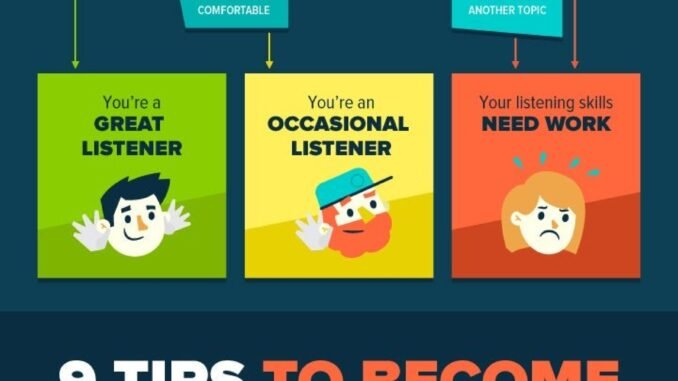
A friend once told me, “I love talking to you — you actually listen.” I was stunned, because I hadn’t done anything special. I’d just… not looked at my phone. That’s how rare real listening has become. If you’re asking how can I be a better listener in conversations, the uncomfortable starting point is this: most of us aren’t listening. We’re waiting — rehearsing our response, hunting for a relate-able anecdote, half-tracking while thinking about dinner. The good news: listening is a trainable skill, and small changes make you dramatically better at it.
Why bother? Because listening is the highest-leverage social skill in existence. People remember how you made them feel far longer than what you said. Good listeners get told things, trusted faster, promoted more often, and — not coincidentally — report stronger relationships across the board.
How Can I Be a Better Listener in Conversations? Stop Preparing Your Reply
The number one listening killer is internal rehearsal. While someone’s mid-sentence, your brain is drafting your brilliant response — which means you’re literally not hearing them. The fix is a mindset shift: your job in this moment is to understand, not to respond. The response will come; trust that. When you catch yourself rehearsing, gently redirect attention back to their words — what are they actually saying beneath the sentences?
This pairs with the 3-second pause: when they finish speaking, wait three full seconds before responding. It feels eternal at first. What it does: proves they were truly finished (people often add the most important part after a pause), gives you time to actually think, and signals — powerfully — that you’re considering their words rather than reloading.
The 9 Skills, Easiest First
- Put the phone away — visibly. Not face-down on the table (that still says “I might leave”). Pocket, bag, or another room. Studies show even a visible phone reduces conversation quality. This single move puts you ahead of 80 percent of people.
- Face them and uncross. Body angled toward them, arms uncrossed, occasional eye contact (not a stare — the 50/70 rule: eye contact 50 percent while speaking, 70 percent while listening, is a decent guide).
- Use encouragers. Small sounds — “mm-hmm,” “yeah,” “go on” — and nods. They cost nothing and keep people talking past the surface level where the interesting stuff lives.
- Reflect, don’t just react. Paraphrase: “So the deadline moved up and now your whole week is scrambled?” Reflection proves understanding and invites correction — both build trust fast.
- Name the feeling. “That sounds frustrating” or “You seem really excited about this.” Labeling emotions (theirs, not yours) makes people feel profoundly heard. You don’t have to be right — they’ll correct you, and the correction deepens the conversation.
- Ask the second question. The first question gets the headline; the second gets the story. “How did the interview go?” → “Good.” → “What part felt best?” That’s where conversations come alive.
- Resist the relate-and-redirect. “Oh, that happened to me too — let me tell you about MY thing” hijacks their moment. If your story genuinely helps, ask: “Something similar happened to me — want to hear it, or do you want to keep going?” Let them choose.
- Tolerate silence. Pauses aren’t failures. Some people think out loud slowly. Rushing to fill silence trains people to give you the short version.
- Close the loop later. “Hey, how did that presentation go?” Remembering and following up is advanced listening — it says their words stuck with you after the conversation ended.
Listening When You Disagree (The Hard Mode)
All of the above gets ten times harder when the other person is saying something you think is wrong. But this is where listening matters most — in disagreements, at work, with family. The technique: steelman before you respond. Restate their position so fairly they’d say “yes, exactly” — then share your view. Most arguments are two people responding to strawmen; steelmanning dissolves that instantly.
Also, separate listening from agreeing. “I hear you” doesn’t mean “you’re right.” You can fully understand someone’s perspective and still disagree — and saying “I see why you’d see it that way, and I see it differently because…” preserves both honesty and respect. This is the core skill behind handling disagreements well and strengthening your relationship — the same muscle, different context.
The Listening Audit (Try It This Week)
Pick one conversation a day and run this mental checklist afterward: Did I look at my phone? Did I rehearse my reply while they talked? Did I ask a second question? Did I reflect anything back? Score yourself honestly for a week. Most people see dramatic improvement by day five — not because they learned new tricks, but because attention itself became the practice. Relationship researchers consistently rank “feeling heard” among the top predictors of relationship satisfaction, above shared interests and even above conflict resolution skills.
The 3-Second Pause
The single most powerful listening technique takes three seconds: when someone finishes speaking, wait three full seconds before responding. It feels eternal; it’s transformative. The pause does three things: it proves you were actually listening (not rehearsing your reply), it gives the speaker space to add the real point (people often lead with the safe version), and it stops you from interrupting. Most poor listening isn’t malice — it’s eagerness. The pause converts eagerness into attention. Practice it in low-stakes conversations first; by the time you need it in a hard one, it’s automatic.
Listening in Conflict (When It’s Hardest)
Listening is easy when you agree. It matters most when you don’t. In heated moments, try reflecting before responding: “What I’m hearing is…” followed by their point in your own words. This isn’t agreement — it’s proof of comprehension, and it’s disarming. People who feel heard stop shouting; people who don’t escalate. You can fully understand someone’s position and still disagree — but you can’t resolve what you haven’t understood. The best arguers are the best listeners first.
The Bottom Line
Being a better listener isn’t about techniques — it’s about deciding the other person’s words matter more than your next sentence. Put the phone away, pause three seconds, reflect instead of react, and ask the second question. Do that consistently and people will start seeking you out for conversations. In a world of half-attention, full attention is a superpower.
Leave a Reply