
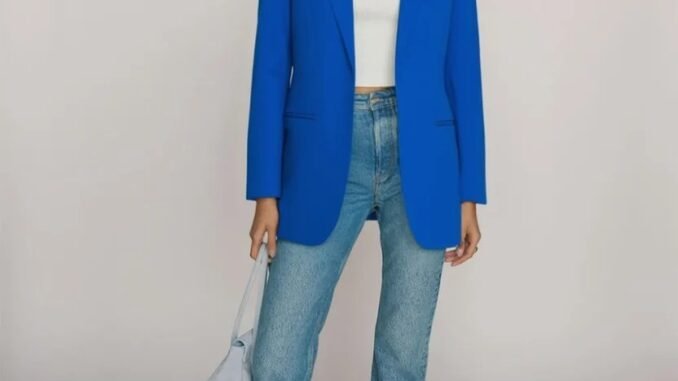
The blazer is the hardest-working item in your closet — but most people only wear it “dressed up,” which wastes 80% of its potential. How can I style a blazer for a casual weekend look? A blazer with jeans and sneakers is one of modern fashion’s great uniforms: polished without trying, put-together without stiffness. The trick is in the styling details — the wrong blazer styled the wrong way reads as “I forgot to take off my work jacket,” while the right approach reads as effortless cool. I’ve lived in this look on weekends for years. Here’s how to nail it.
How Can I Style a Blazer for a Casual Weekend Look? Start With the Right Blazer
Not all blazers casualize equally:
- Unstructured/soft-shoulder blazers casualize best — no padding, natural drape, relaxed feel. Knit blazers, cotton blazers, and linen blazers are weekend naturals.
- Structured corporate blazers can work, but need more aggressive casualizing (see below) — the contrast is actually part of the charm.
- Colors and patterns: navy, olive, tan, gray, plaid/checks, subtle textures — all weekend-friendly. Black structured blazers are the hardest to casualize (they read “work” or “evening”).
- Fit: slightly relaxed (not boxy, not painted-on). You should be able to push the sleeves up comfortably — that’s the #1 casual blazer move.
The Casualizing Techniques
- Push/roll the sleeves to the forearm — the single most effective casualizer. Exposes the shirt cuff, relaxes the silhouette, says “weekend” instantly.
- Pop the collar slightly (or don’t button the top) — small rebellion, big signal.
- Leave it open. Buttoned blazer = formal. Open blazer = relaxed. The open drape over a tee is the whole look.
- Mix textures: blazer + tee + jeans works because of the texture contrast (smooth blazer, soft tee, rugged denim). All-same-texture outfits look flat.
- Shoes set the tone: sneakers or loafers = weekend; oxfords = office. The shoe choice does 50% of the casualizing work.
Copy-Paste Weekend Formulas
Women
- The classic: navy unstructured blazer (sleeves pushed) + white tee + dark straight jeans + white sneakers + crossbody bag. Effortless, always works.
- Elevated: plaid blazer + black turtleneck + black skinny jeans + Chelsea boots. Cozy polish.
- Summer: linen blazer + tank + white jeans (cuffed) + flat sandals. Breezy but put-together.
- Edgy: oversized blazer + graphic tee + faux-leather leggings + ankle boots. The volume contrast is the style.
Men
- The classic: navy cotton blazer (open, sleeves pushed) + white or gray crew-neck tee + dark jeans + clean minimal sneakers or loafers. The uniform.
- Textured: olive/tan blazer + Henley + chinos + desert boots. Rugged refinement.
- Summer: unlined linen blazer + polo or open-collar shirt + tailored shorts (knee-length, not cargo) + loafers. Resort polish.
- Evening-casual: dark blazer + black tee + dark jeans + Chelsea boots. The date-night upgrade.
Blazer + Jeans: Getting the Details Right
- Jean wash matters: dark indigo or black jeans read polished; light/distressed washes read very casual. Match the wash to how dressed-up you want to be.
- Jean fit: straight, slim, or relaxed — clean lines. Avoid overly baggy or overly distressed with a blazer; the contrast tips from “cool” to “confused.”
- The tee: not the free conference tee. A quality plain tee (good cotton, good fit, no graphics — or one good graphic) in white, gray, black, or navy. The tee’s quality makes or breaks the look.
- Layer underneath: turtlenecks, Henleys, Breton stripes, thin sweaters — all excellent blazer partners that read weekend, not boardroom.
Common Mistakes
- Too-formal blazer + too-casual rest: a pinstripe corporate blazer with gym shorts isn’t “mixing” — it’s a cry for help. Keep the casual pieces nice casual.
- Wrong proportions: oversized blazer + skinny jeans works; oversized blazer + wide-leg pants + chunky shoes drowns most frames (see volume-balancing principles).
- Neglecting the details: the weekend blazer still needs steaming, the tee still needs to be unstained, the sneakers still need to be clean. Casual ≠ sloppy.
- Forgetting the blazer’s power: this look works for nice dinners, dates (first-date guide), galleries, and anywhere “smart casual” is the code (decode here). It’s not just errands-wear.
The weekend blazer is also the gateway to developing personal style — it’s the piece that teaches you how one item transforms across contexts. And if your blazers need refreshing, clothing revival techniques keep them sharp.
For visual inspiration, Who What Wear’s blazer outfit galleries show the casual styling across seasons.
The Blazer Collection: Building Your Weekend Arsenal
Once the weekend blazer becomes your uniform, build a small rotation — three blazers cover every casual scenario. Blazer 1: the navy workhorse — unstructured cotton or wool-blend, goes with literally everything. If you own one blazer, this is it. Blazer 2: the texture piece — olive, tan, tweed, or subtle plaid — adds visual interest when navy feels boring. Blazer 3: the statement — whatever speaks to you: black for edge, camel for polish, a bold check for personality. All three should be unstructured or half-canvassed (soft shoulders), all three in your correct size (shoulders fit — everything else is alterable). Thrift all three ($15–$30 each — blazers are the #1 thrift category) and tailor the best one. Three blazers, ~$100 total with tailoring, infinite weekend outfits. The blazer is the highest-leverage item in casual menswear and womenswear alike — nothing else transforms jeans and a tee so completely with so little effort.
Blazer Care: Keeping Them Sharp
Weekend blazers take more abuse than office ones — food, travel, constant wear. Brush after wearing: a clothes brush ($12) removes dust and revives the nap in 30 seconds — the highest-ROI garment care habit. Rest between wears: 48 hours on a proper hanger (wide, contoured — never wire) lets the fabric recover. Dry clean sparingly: 1–2 times per season max; over-cleaning destroys canvassing and fabric. Spot-clean stains immediately instead. Steam, don’t iron: direct ironing crushes lapels and creates shine — steam refreshes without damage. Store properly: buttoned, on quality hangers, with breathing room (crammed blazers wrinkle permanently). A $30 thrifted blazer maintained this way looks better at year five than a $300 blazer treated carelessly at year one. Care is the real luxury.
The practical takeaway: unstructured blazer in navy/olive/tan, sleeves pushed up, worn open over a quality tee or knit, with dark jeans and sneakers or loafers. The shoes and the pushed sleeves do the casualizing; the blazer’s structure does the polishing. One piece, infinite weekends.
Leave a Reply