
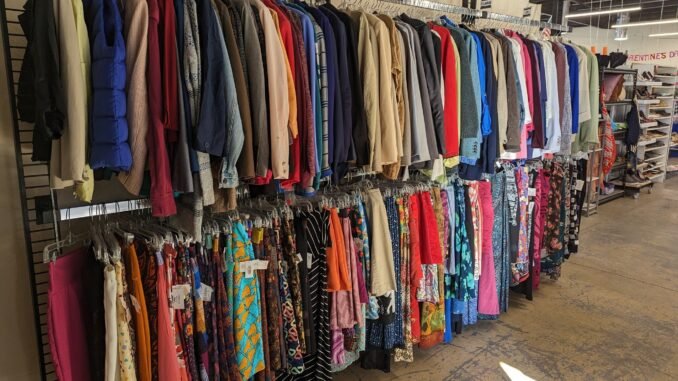
You’ve heard the legends — designer bags for $10, perfect vintage Levi’s, the $5 blazer that looks like $500. Then you walk into a thrift store and it’s overwhelming: endless racks, weird smells, no sizes in order, and the creeping suspicion that everyone else knows something you don’t. What are the best thrift store shopping tips for beginners? Thrifting is a skill, and like any skill, it has techniques. I’ve thrifted for over a decade — my wardrobe is probably 40% secondhand — and the difference between frustrating trips and legendary finds comes down to strategy, not luck.
Here’s the complete beginner’s playbook: when to go, where to look, what to buy, what to skip, and how to spot quality in 10 seconds.
What Are the Best Thrift Store Shopping Tips for Beginners? When and Where
- Go on weekday mornings. New donations hit the floor on weekday mornings; weekends are picked over and crowded. Tuesday–Thursday, right at opening, is prime time.
- Learn your stores. Goodwill and Salvation Army (huge inventory, variable quality), local hospice/charity shops (often higher-end donations), consignment stores (curated, pricier, less digging), estate sales (the deep end — best for furniture and vintage). Thrift stores in affluent neighborhoods consistently have better donations — the #1 location hack.
- Check the color-tag sales. Most thrift chains discount specific tag colors weekly (50% off yellow tags, etc.). Time your trips and stack the savings.
- Go often, buy rarely. Thrifting rewards frequency — 20-minute weekly pop-ins beat 3-hour monthly marathons. The best finds go within hours.
- Have a list, but stay open. Know what you’re hunting (black blazer, leather tote, wool sweater), but leave room for the unexpected treasure. The list prevents impulse junk; openness allows serendipity.
How to Hunt: The Technique
- Scan by fabric and color first, size second. Sizes lie (especially vintage) — train your eye to spot silk, wool, cashmere, and leather by touch. Run your hand along racks feeling for quality fabrics; your fingers learn faster than your eyes.
- Check every section. The men’s section has oversized blazers, flannels, and sweaters women pay premiums for. The housewares hide Le Creuset. The kids’ section has barely-worn premium brands. The “wrong” sections are where the best finds hide because fewer people look there.
- Always try on. Sizes are meaningless in thrift (vanity sizing + vintage sizing + stretched-out). Fitting rooms exist — use them. Do the sit-stand-walk test.
- Inspect ruthlessly. Check underarms (stains), crotch/inseam (wear), zippers (function), buttons (present), hems (intact), and hold up to light (thin spots, holes). Smell it — mustiness washes out, smoke doesn’t always.
- Check the labels. Natural fibers (wool, silk, cashmere, linen, cotton) over synthetics. Recognizable quality brands. “Made in Italy/France/England” on older pieces often signals quality construction.
What to Buy (Thrift Gold) vs. What to Skip
Buy These — Best Value Secondhand
- Blazers and wool coats: structured, durable, expensive new, abundant used. The #1 thrift category.
- Leather bags, belts, and shoes (lightly worn): quality leather lasts decades; leather care revives almost anything.
- Silk blouses and shirts: $5 for what costs $80 new.
- Denim: vintage Levi’s, quality jeans — denim is nearly indestructible and the revival techniques handle fading.
- Cashmere and wool sweaters: check for moth holes carefully, but the value is absurd.
- Formal/occasion wear: worn once, donated. Wedding guest dresses are prime thrift finds.
- Hard goods: Pyrex, cast iron, quality kitchen tools, frames, books, furniture (wood furniture is the ultimate thrift category).
Skip or Scrutinize
- Fast-fashion basics: a $5 H&M tee isn’t a deal — it’s just used. Buy quality or don’t buy.
- Swimwear and underwear: hygiene. (Bras in consignment stores with tags = fine.)
- Shoes with worn soles: unless they’re resoleable quality (check boot rescue), dead soles aren’t worth it.
- Anything needing more repair than it’s worth: the $30 alteration on a $5 shirt you kind of like = a $35 shirt you kind of like. Do the math.
- Stained/damaged “project” pieces unless you genuinely do the projects (be honest — the project pile is where good intentions go to die).
The 10-Second Quality Test
Pick up any garment and check: fabric (natural fibers, good weight, no pilling), seams (straight, tight stitching, finished edges — turn inside out), lining (lined = quality in jackets/coats), hardware (zippers glide, buttons secure), pattern matching (plaids/stripes aligning at seams = quality construction). Pass all five and you’ve found something good regardless of brand.
Hygiene and Care
Wash everything before wearing — hot water when the fabric allows. A vinegar soak kills thrift-store smell. Dry-clean structured pieces (blazers, wool coats) before first wear. This isn’t paranoia; it’s just sensible. After the initial clean, proper storage and minor tailoring ($15 hem, waist tweak) transform thrift finds into wardrobe stars.
Thrifting also feeds the bigger strategies: it’s the engine of budget capsule wardrobes and professional dressing on a budget — and it’s the most sustainable way to shop, keeping quality clothes in circulation.
For community wisdom, r/ThriftStoreHauls shows what’s possible (and calibrates your expectations), and Goodwill’s site lists locations and sale schedules.
Online Thrifting: The Digital Frontier
Physical stores aren’t the only game — online secondhand has exploded. ThredUp: huge inventory, search filters by brand/size/condition, frequent sales — the closest to “online thrift store.” Poshmark: peer-to-peer, best for specific brand hunts — make offers (sellers expect 15–20% below asking), bundle multiple items from one seller for shipping savings. eBay: unmatched for vintage and specific items — use saved searches with alerts for grail pieces. The RealReal/Vestiaire: authenticated luxury secondhand — the safe way to buy designer. Facebook Marketplace/local groups: best for furniture and bulk lots, no shipping. Online tips: always check measurements (not just size), scrutinize photos (ask for more if sparse), factor shipping into the “deal,” and check return policies (many are final sale — only buy when certain). Online thrifting trades the treasure-hunt thrill for surgical precision: you find exactly what you want, often cheaper than in-store, without leaving home. Use both — stores for discovery, online for targeted hunts.
The practical takeaway: weekday mornings, affluent-neighborhood stores, shop by fabric-feel not size tags, always try on, inspect ruthlessly (armpits, zippers, light-test), buy blazers/leather/silk/denim/occasion wear, skip fast-fashion basics and project pieces. Frequency beats marathon sessions — the treasure goes to the regulars.
Leave a Reply