
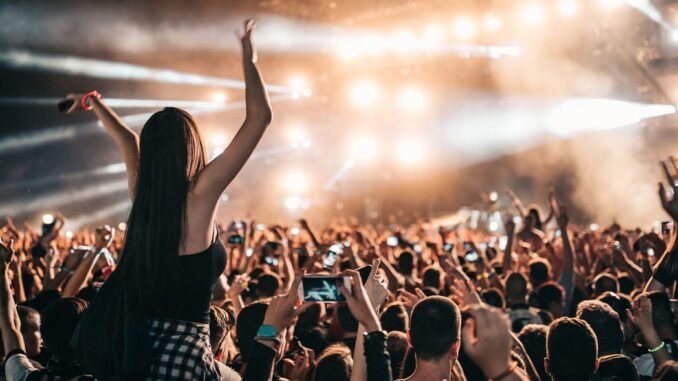
The show was incredible. Your ears are ringing. Two days later, the ringing is still there — and a tiny part of your hearing may never come back. How can I protect my hearing at loud concerts and events? Here’s the uncomfortable truth the music industry doesn’t advertise: concerts routinely hit 100–120 decibels, and at those levels, permanent hearing damage begins in minutes. That ringing (tinnitus) is your inner ear’s hair cells crying for help — and unlike a hangover, the damage doesn’t fully reset. I learned this the expensive way in my twenties; my audiologist showed me the telltale 4kHz “noise notch” in my hearing test, the signature of loud-music damage.
The good news: protecting your hearing at events is easy, cheap, and doesn’t ruin the experience. In fact, good earplugs make concerts sound better.
How Can I Protect My Hearing at Loud Concerts and Events? Understand the Numbers
Decibels are logarithmic — every 10 dB increase is ten times the sound intensity. Safe exposure limits (NIOSH guidelines):
- 85 dB: safe for 8 hours (busy restaurant, heavy traffic)
- 95 dB: safe for ~50 minutes
- 100 dB: safe for ~15 minutes (typical concert, nightclub)
- 110 dB: safe for ~1.5 minutes (front row at a rock show, sporting event peaks)
- 120 dB: immediate risk (sirens, fireworks, some concerts at peak)
A three-hour concert at 105 dB without protection isn’t a fun night out for your ears — it’s an acoustic injury. And the damage is cumulative and permanent: the tiny hair cells in your inner ear don’t regenerate. Once they’re gone, they’re gone — resulting in permanent hearing loss and often chronic tinnitus. There’s no surgery, no pill, no supplement that brings them back.
The Earplug Solution (Better Than You Think)
“But earplugs ruin the music!” — that was true of the foam plugs from the drugstore, which muffle everything unevenly and make concerts sound like you’re underwater. High-fidelity (musician’s) earplugs are a completely different product: they reduce volume evenly across frequencies (typically 12–25 dB), so music sounds exactly the same — just quieter and clearer, with less distortion. Conversations are easier too, because you’re not shouting over the din.
Options at every price:
- Foam plugs (free–$5): better than nothing. Roll, insert deep, hold while they expand. ~30 dB reduction but muffled sound. Keep a pair in your pocket as backup.
- Reusable high-fidelity plugs ($15–$30): Etymotic ER20XS, Eargasm, Earos One. The sweet spot for most concertgoers — great sound, washable, last for years. This is what I wish someone had handed me at 22.
- Custom-molded musician’s plugs ($150–$200): made by an audiologist from molds of your ears. The gold standard — perfect fit, interchangeable filters for different volumes. Worth it if you attend events monthly or work around loud sound.
Put them in before you enter the venue, not after your ears start hurting — pain means damage is already happening.
Smart Positioning and Breaks
- Distance is protection. Sound intensity drops dramatically with distance. Moving 20 feet back from the speakers can cut your exposure significantly. Never stand directly in front of speaker stacks — that’s where the 120 dB zones live.
- Take listening breaks. Step outside or to a quieter area for 10–15 minutes every hour. Your ears partially recover during quiet periods, extending your safe exposure.
- Protect kids aggressively. Children’s ears are more vulnerable, and they can’t judge the risk. Baby earmuffs (like Muted or Alpine Muffy, ~$25) for infants and toddlers; high-fidelity plugs for older kids. If it’s too loud for you, it’s definitely too loud for them.
- Limit the afterparty. Bar and club volumes after the show add to your cumulative dose. Plugs stay in.
Beyond Concerts: Everyday Hearing Protection
Concerts are the dramatic risk, but cumulative exposure includes: power tools and lawn equipment (wear earmuffs — $20 at any hardware store), motorcycles, sporting events and stadiums (crowd peaks hit 110+ dB), fireworks (single blasts can cause instant damage — stand far back), and headphones. For headphones, follow the 60/60 rule: max 60% volume for 60 minutes at a time, then a break. If someone next to you can hear your music through your earbuds, it’s too loud.
Also worth knowing: some medications (certain antibiotics, high-dose aspirin, some chemotherapy drugs) are ototoxic — they can damage hearing. If you’re on long-term medication and notice ringing or hearing changes, tell your doctor. And if you already have persistent tinnitus, you’re not alone and there are management strategies — an audiologist is the right starting point, not internet “cures.”
After the event, give your ears 24–48 hours of relative quiet. Temporary ringing that fades within a day is a warning; ringing that persists beyond 48 hours warrants a hearing check. Consider a baseline hearing test in your 20s or 30s (often $50–$75 at Costco or free at some clinics) so you have something to compare against later — hearing loss creeps up silently, and early documentation helps.
The CDC’s hearing loss prevention page covers these strategies officially, and the Hearing Loss Association of America is an excellent resource for living well with existing hearing issues.
Musicians and Frequent Concertgoers: Level Up
If you perform, work crew, DJ, or attend shows monthly, basic foam plugs aren’t enough — invest in custom-molded musician’s earplugs ($150–$200 from an audiologist) with interchangeable filters (9, 15, 25 dB). The perfect seal and flat sound reduction make them comfortable for entire festivals, and the different filters let you match protection to the venue — lighter filters for acoustic sets, maximum for front-row metal. Many professional musicians also use in-ear monitors, which protect hearing while actually improving what they hear on stage. And don’t forget the rest of your body at day-long outdoor festivals: heat and dehydration are the other big risks, so know the warning signs of dehydration and drink water between sets. For daily listening, choosing quality earbuds that seal well lets you enjoy music at lower volumes — good isolation means you never need to crank it to overcome background noise. Your ears don’t get replacements; everything else in your setup is adjustable except them.
The practical takeaway: buy $20 high-fidelity earplugs and keep them with your concert tickets — they make music sound better, not worse. Stay away from speaker stacks, take hourly quiet breaks, protect kids’ ears without exception, and follow the 60/60 rule for headphones. Your 60-year-old self will hear the difference.
Leave a Reply