
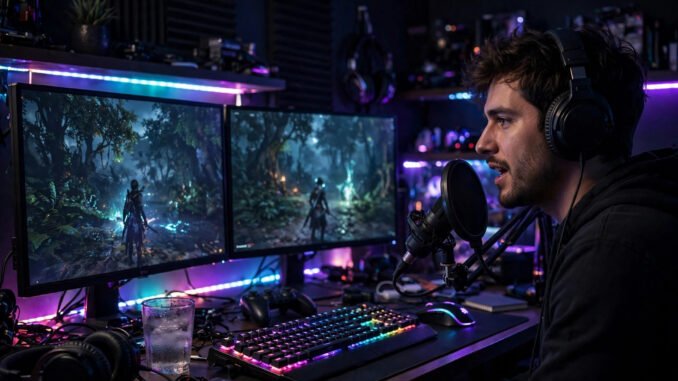
Is now a good time to start a game streaming channel — or should you wait? It’s the question everyone asks while watching a streamer with 10,000 viewers and thinking “I could do that.” Here’s the honest 2026 answer: the gold rush is over, but the opportunity is better than ever. The era of getting famous by simply being live is gone; the era of building a real community around a specific niche is thriving. This guide breaks down the real landscape, what it actually takes, and why “now versus later” is the wrong question entirely.
The 2026 Streaming Landscape: Saturated but Not Closed
Let’s be blunt about the numbers. Twitch hosts millions of monthly streamers; the median stream has fewer than five viewers. YouTube Gaming and TikTok Live have fragmented the audience further, and Kick’s creator-friendly revenue splits shook up platform loyalty. Discoverability — getting strangers to find you — is the hardest it’s ever been.
But here’s what the doom statistics miss: streaming was never a lottery; it’s a craft business. The streamers growing in 2026 share a pattern — they don’t stream “games,” they stream a specific thing: speedrunning one retro title, cozy games with a calm community, high-level strategy commentary, comedy-first variety. Broad “I play popular games” channels drown; narrow, personality-driven niches float. The market isn’t closed to newcomers — it’s closed to generic newcomers.
The second shift favors beginners: short-form discovery. TikTok, YouTube Shorts, and Twitch clips mean a 30-second funny moment can do what 500 hours of streaming couldn’t in 2016 — bring strangers to your channel. Modern growth is clips-first, streams-second.
What It Actually Takes (The Unsexy Truth)
The equipment bar is lower than you think
You can start with what you own: a console or PC, a $30–$50 USB microphone (audio quality matters more than video — viewers forgive 720p, they don’t forgive bad audio), and free OBS Studio software. A webcam helps but isn’t required; plenty of growing streamers are faceless. Total startup cost: $0–$100 if you already game. The streamers who fail don’t fail for lack of a $300 camera.
The schedule matters more than the gear
Streaming rewards consistency brutally. Three scheduled 3-hour streams per week beats random 8-hour marathons — viewers can’t form habits around unpredictability. Twitch’s own creator guidance emphasizes predictable schedules, and the Twitch Creator Handbook is the best free curriculum for the platform mechanics.
The real work is off-stream
Growing streamers spend as much time clipping highlights, posting to TikTok/Shorts, networking with similar-size streamers, and engaging on Discord as they do live. If you only want to “just play games on camera,” streaming will disappoint you — it’s content creation with a live component, not gaming with an audience.
The Money Question: Realistic Expectations
Let’s kill the fantasy with numbers. Twitch Affiliate (the first monetization tier: 50 followers, modest viewership) earns most small streamers $20–$200/month. Reaching the roughly 100–200 concurrent viewers needed for sustainable part-time income typically takes 1–2 years of consistent, strategic work. Full-time income usually requires 500+ regular viewers plus diversified revenue (sponsorships, YouTube, merch).
The honest framing: treat year one as a hobby that might pay for itself, not a career bet. Stream because you enjoy the performance and community; let money be a lagging indicator. The creators who survive are the ones who’d stream to ten viewers happily — because for months, they will.
Why “Now vs. Later” Is the Wrong Question
Here’s the reframe: the best time to start was never about market timing — it’s about skill compounding. Every month you stream, you get better at commentary, production, clipping, and community management. Those skills compound regardless of viewer count, and they transfer to YouTube, podcasting, and content careers broadly. Starting now versus next year isn’t about catching a wave; it’s about starting the compounding a year earlier.
There are genuine “now” advantages in 2026: AI-assisted tools have collapsed production costs — auto-clipping, noise removal, and highlight detection that once needed editors. Our roundup of AI tools for content creators on a budget covers the ones worth using. Multistreaming to several platforms at once is now normal and permitted, multiplying your surface area. And gaming’s cultural moment keeps expanding — new audiences arrive constantly.
The only timing question that matters: do you have 8–10 hours a week for a year? If yes, start now. If no, wait — not for the market, but for your calendar. Consistency beats timing, always.
The 90-Day Starter Plan
Days 1–30: Foundation. Pick your niche (one game/genre + one angle: cozy, comedy, educational, challenge runs). Set up OBS with a clean, simple overlay — minimal beats cluttered. Stream 3x/week on a fixed schedule. Don’t look at viewer counts; look at your VODs and fix one thing each week (audio levels, dead air, rambling).
Days 31–60: Discovery engine. Clip your best 30–60 seconds from every stream; post daily to TikTok/Shorts. Engage genuinely with 5–10 similar-size streamers (not “check out my channel” spam — actual community). Join your game’s Discord and be useful there.
Days 61–90: Evaluate honestly. Are you enjoying it? Is anything growing — followers, clip views, returning chatters? Growth compounds slowly; flat-at-zero with no engagement after 90 consistent days suggests a niche or presentation problem worth fixing, not necessarily quitting.
And remember why games are fun in the first place — the social joy that makes game nights with non-gamer friends great is the same energy that makes streams watchable. Entertain first; optimize second.
Conclusion: Start for the Craft, Stay for the Community
Is now a good time to start a game streaming channel? The gold rush ended years ago — and good riddance. What’s left is better: a mature medium where niche communities thrive, tools are free, and clips give newcomers a real discovery path. Don’t wait for a better market; there isn’t one coming. Start when you can commit 8–10 hours a week for a year, pick a niche narrower than feels safe, and treat the first year as paid-in-fun education. The streamers who make it aren’t the ones who timed the market — they’re the ones who were still streaming in month thirteen.
Frequently Asked Questions
Is it too late to start streaming in 2026?
No — but the “stream popular games and get discovered” era is over. Growth now comes from narrow niches, short-form clips driving discovery, and genuine community building. Newcomers with a specific angle and consistent schedule still break through regularly.
How much does it cost to start streaming?
$0–$100 if you already have a gaming setup: free OBS Studio software, and optionally a $30–$50 USB microphone (the highest-impact purchase — audio quality matters more than video). Webcams, lighting, and overlays can come later.
How long before a streaming channel makes money?
Most consistent streamers reach Affiliate-level earnings ($20–$200/month) within 3–6 months. Sustainable part-time income (100–200 regular viewers) typically takes 1–2 years. Treat year one as a hobby, not a career.
Twitch, YouTube, or Kick for beginners?
Twitch has the biggest live audience and best discovery tools for small streamers; YouTube offers better long-term content value (VODs keep earning); Kick offers better revenue splits. Many beginners multistream to Twitch + YouTube/TikTok for clips. Pick where your niche’s audience already watches.
Do I need to show my face to stream?
No. Many successful streamers are faceless (VTubers, gameplay-only, voice-only). A good microphone and engaging commentary matter far more than a camera — viewers stay for personality and content, not faces.
Leave a Reply