
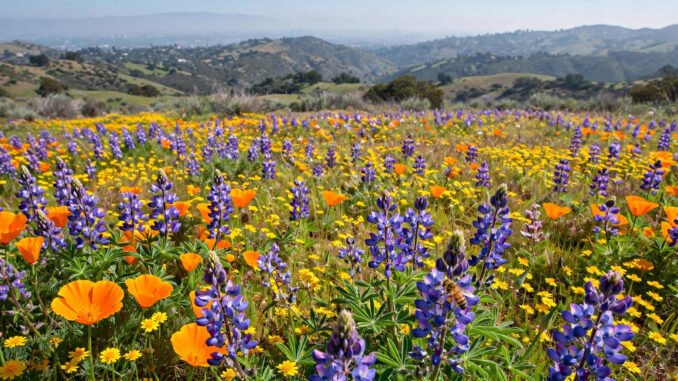
Los Angeles sits inside a global biodiversity hotspot — the California Floristic Province — which means the wildflowers that carpeted these hills for millennia are still the best-adapted, lowest-maintenance plants you can grow here. A wildflower patch isn’t just pretty (though the spring superbloom effect in miniature is genuinely spectacular); it’s a water-wise, pollinator-feeding, mow-free alternative to thirsty lawn. And it costs almost nothing to start. A packet of native seed, a patch of cleared ground, and timing your sowing to the winter rains — that’s the whole budget. Here’s what starting a wildflower patch in Los Angeles really costs, what to plant, and the mistakes that waste beginners’ money.
The Real Cost Breakdown
Seed ($10–$35): This is the main expense, and it’s tiny. A quarter-pound of quality native wildflower mix covers 500–1,000 square feet and costs $15–$30 from the Theodore Payne Foundation’s seed store (the gold standard for Southern California natives) or similar native nurseries. Individual species packets (California poppy, lupine, clarkia) run $3–$5 each if you want to design your own mix. Site prep ($0–$50): Clearing existing weeds by hand costs nothing but weekends; sheet mulching (cardboard + mulch) costs $20–$50 in mulch if you don’t score free arborist chips. Water ($5–$15 for the season): Fall-sown wildflowers ride the winter rains; you supplement only in dry spells the first year. After establishment, most California natives need zero summer water — the entire point. Total realistic budget: $25–$75 for a showy patch up to a thousand square feet. Compare: installing the same area as sod costs $1,000+, plus ongoing water bills that wildflowers simply don’t generate. The economics aren’t close.
What to Plant: Natives Only
This is where beginners waste money: generic “wildflower mix” bags from big-box stores, which often contain non-native species (baby’s breath, cornflower, cosmos) that are pretty but ecologically empty here — and sometimes include actual invasives. Buy California native mixes formulated for your area. The starter all-stars: California poppy (Eschscholzia californica) — the state flower, absurdly easy, reseeds itself; lupines (arroyo and sky lupine) — nitrogen-fixers that improve your soil while blooming purple; clarkia (farewell-to-spring) — late bloomer that extends the show into early summer; tidy tips and goldfields — the yellow-and-white confetti of the classic superbloom look; phacelia — bee magnet extraordinaire. The Lady Bird Johnson Wildflower Center has searchable native plant databases, and the Theodore Payne Foundation (Sun Valley — visit in person if you can) sells mixes tuned to LA’s specific microclimates, from coastal to inland valley. A 70/30 mix of annuals (first-year fireworks) and perennials (the long game) gives you instant gratification plus a patch that improves yearly.
Site Prep and Timing: The Two Things That Decide Everything
Timing: Sow in fall (October–December), before the winter rains. California native annuals are evolutionarily programmed to germinate with the first rains, grow through winter, and bloom in spring — sowing in spring is the classic beginner error that produces sad, stunted flowers. Prep: Wildflower seed needs bare mineral soil and zero weed competition. The no-waste method: in late summer, scalp existing weeds to the ground, lay overlapping cardboard (free from any big-box store’s recycling), cover with 3–4 inches of mulch, and let it sit until fall — the weeds underneath die, and you pull back the mulch in patches to expose soil for sowing. Avoid tilling if you can: tilling brings buried weed seeds to the surface and disturbs soil ecology. Sowing: Mix seed with sand (better distribution), scatter at the packet rate, rake lightly or walk it in for soil contact, and water once to settle. Then let the rains take over. If the winter is dry (increasingly common), water deeply every 2–3 weeks until rains arrive — underwatering at germination is the other great seed-killer. The National Audubon Society’s native plant resources explain the pollinator payoff: a native wildflower patch feeds the exact bees, butterflies, and hummingbirds that co-evolved with these plants.
Water, Maintenance, and the Second Year
Year one needs modest attention: supplemental water during dry spells, and weeding — the single most important maintenance task. Learn what your seedlings look like (Theodore Payne’s site has seedling ID guides) so you don’t weed out the wildflowers; pull everything else while small. Do not fertilize — native wildflowers evolved in lean soils, and fertilizer mostly supercharges the weeds. Year two is where the magic compounds: annuals that bloomed in year one dropped seed, and with the year’s rains you’ll get a denser, lusher patch for zero additional cost — this is the self-sowing dividend that makes wildflowers the cheapest garden there is. Perennials (lupines, poppies behave as short-lived perennials) come back stronger. Maintenance from year two onward: a late-summer “chop and drop” (cut spent stalks, leave them as mulch — the seed is already in the soil), occasional weeding, and nothing else. No mowing, no fertilizing, no replanting. If you’re choosing easy wins elsewhere in the yard, the best plants for beginners with no gardening experience pair well with a wildflower patch, and the whole project fits beautifully into low-maintenance landscaping ideas for a front yard — a wildflower strip along the sidewalk outshines lawn strips while using a fraction of the water.
Mistakes That Waste Money
Buying generic mixes: as covered — non-natives underperform and don’t support local ecology. Sowing in spring: produces a fraction of the bloom for the same seed cost. Overwatering in summer: California natives go dormant in summer by design; summer water rots their crowns and invites weeds. Let the patch go golden-brown — that’s not dead, that’s dormant, and it’s the authentic California look. Planting in deep shade: most wildflowers want full sun; shady LA yards suit native shade plants (coral bells, hummingbird sage) instead. Giving up after a dry year: wildflower displays vary enormously with rainfall — a “bad” year still builds the seed bank for the next wet winter’s explosion. Patience is part of the method. And mowing at the wrong time: if you must tidy, wait until seed heads have dried and dropped (late summer) — mowing in spring mows the seed crop you’re counting on.
Starting a wildflower patch in Los Angeles really costs $25–$75, one fall weekend of prep, and the discipline to sow before the rains and then mostly leave it alone. What you get is a patch of the actual California landscape — poppies, lupines, phacelia — feeding native bees, using almost no water, and reseeding itself more thickly every year. Lawns charge you rent forever. Wildflowers pay dividends.
Frequently Asked Questions
When should I plant wildflowers in Los Angeles?
October through December, before the winter rains. Native annuals germinate with fall/winter rain, grow through the cool months, and bloom March–May. Spring sowing is the most common beginner mistake — it yields weak, short-lived blooms.
How much does a wildflower patch cost?
$25–$75 total for up to 1,000 square feet: $10–$35 for native seed, $0–$50 for site prep (often free with cardboard sheet-mulching), and minimal first-year water. Established patches cost essentially nothing — they reseed themselves.
Do wildflowers need watering in LA summers?
No — and summer water harms most California natives. They’re adapted to go dormant in the dry summer; the golden-brown dormant phase is normal and healthy. Water only during the fall/winter growing season in dry spells.
Will wildflowers attract bees and wasps to my yard?
They’ll attract native bees, butterflies, and hummingbirds — which is the point. Native bees are mostly solitary and non-aggressive (many can’t sting). The pollinator activity is a feature, and it’s concentrated on the flowers, not your patio.
Can I just scatter seed on my existing lawn?
No — lawn grass outcompetes wildflower seedlings every time. You need bare soil: kill or remove the grass first (sheet mulching is the cheapest method), then sow into cleared ground in fall. Skipping prep is the fastest way to waste seed.
Leave a Reply